-
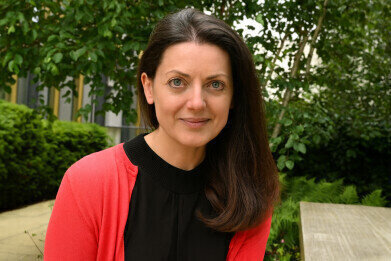 Bethan Psaila, Ludwig Oxford. Credit: Ludwig Cancer Research
 -
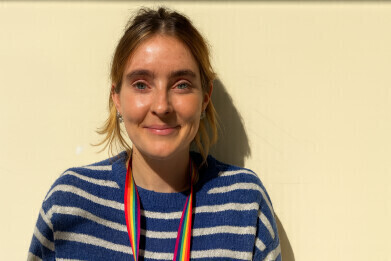 Lauren Murphy, Ludwig Oxford. Credit: Ludwig Cancer Research
Research news
Platelets suppress inflammation and boost early cancer detection through liquid biopsy: study
Aug 18 2025
Platelets are most often associated with blood clotting, scab formation and their downside contribution to heart attacks and strokes. Yet these small, disc-shaped cells that form part of the blood have long been known to perform a broader range of functions, from surveillance against infection to the recruitment of immune cells and even the direct destruction of pathogens. Research by Ludwig Cancer Research has now revealed an additional role for platelets that may transform approaches to cancer detection and prenatal screening.
“While platelets do not have their own nuclei, we [have] discovered that they act like sponges, mopping up the fragments of DNA that are released by dead and dying cells,” said Dr. Bethan Psaila of Ludwig Oxford at Oxford University in the UK.
“Our bodies employ multiple mechanisms to clear these bits of DNA from the bloodstream, as they can provoke inflammatory and autoimmune disorders if they accumulate. Our findings suggest platelets play an important role in limiting the abundance of DNA fragments in plasma.
“Fascinatingly, we also discovered that they then release these pieces of DNA when they are activated, suggesting that platelets can deploy their DNA cargo in a manner that prevents nonspecific inflammation yet elicits targeted inflammatory responses where they’re needed, such as, say, at a site of injury,” said Psaila.
Circulating cell-free DNA (cfDNA) can include fragments derived from tumour cells, known as circulating tumour DNA (ctDNA). Techniques have previously been developed to isolate ctDNA for non-invasive cancer detection and to monitor treatment responses. However, ctDNA concentrations can be very low early in the development of disease, which limits the sensitivity of liquid biopsy screening.
Currently, cfDNA is isolated from plasma after blood cells – including platelets – have been discarded. The new findings suggest that a significant fraction of cfDNA, including tumour-derived material, resides within platelets and is therefore overlooked.
“We’ve demonstrated that platelets take up DNA fragments [they encounter] that bear the mutational signatures of cancer cells,” said Dr Lauren Murphy, co-lead author.
“This is true not only in patients with advanced cancer but – remarkably – also in people who have pre-cancerous polyps in their colon, suggesting that platelets may offer an additional and so far, untapped reservoir of cfDNA that could significantly improve the sensitivity of liquid biopsies.”
The discovery has important implications for cancer prevention and early detection. The team investigated why platelets, which lack nuclei, would contain DNA. Platelets possess an open canalicular system – a network of membrane-lined channels that allows them to exchange biomolecules.
Psaila proposed several years ago at a Cancer Research UK meeting that this system might enable platelets to collect genomic cfDNA as they circulate. With support from Dr. Chris Gregory of the University of Edinburgh, she secured funding to pursue the hypothesis, adding Murphy to the project. Early promising data led to further funding from Cancer Research UK and established the direction of the present study.
Computational analysis led by Dr. Benjamin Schuster-Böckler at Ludwig Oxford confirmed that platelets collect human cfDNA both in laboratory cultures and in clinical samples. To exclude contamination from megakaryocytes – the nucleated cells that produce platelets – the researchers analysed samples from pregnant women carrying male foetuses. They reported that they could predict foetal sex in every case by detecting Y chromosome fragments in platelets, which could only have originated from foetal cfDNA absorbed during circulation.
“Given their abundance, ease of isolation and tissue-wide perfusion, platelets are ideally positioned to serve as biosensors for genetic perturbations across tissues,” said Psaila.
The researchers plan to explore how platelets regulate cfDNA in the bloodstream and to determine the consequences of releasing DNA fragments upon activation.
For further reading please visit: 10.1126/science.adp3971

Digital Edition
Lab Asia Dec 2025
December 2025
Chromatography Articles- Cutting-edge sample preparation tools help laboratories to stay ahead of the curveMass Spectrometry & Spectroscopy Articles- Unlocking the complexity of metabolomics: Pushi...
View all digital editions









Events
Jan 21 2026 Tokyo, Japan
Jan 28 2026 Tokyo, Japan
Jan 29 2026 New Delhi, India
Feb 07 2026 Boston, MA, USA
Asia Pharma Expo/Asia Lab Expo
Feb 12 2026 Dhaka, Bangladesh




