-
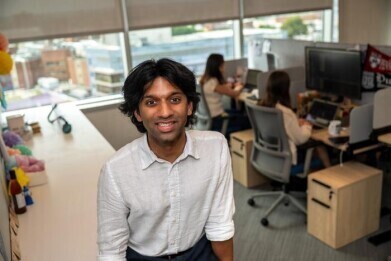 The lab of Pranam Chatterjee (pictured), in collaboration with the lab of César de la Fuente, developed and validated a new "diffusion model" that can generate antibiotic candidates the same way AI creates images. Credit - Sylvia Zhang
 -
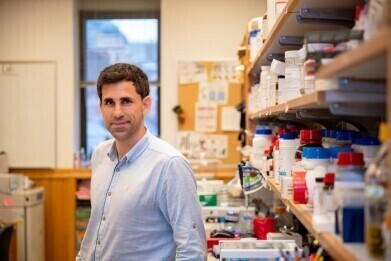 The lab of César de la Fuente (pictured), in collaboration with the lab of Pranam Chatterjee, developed and validated a new "diffusion model" that can generate antibiotic candidates the same way AI creates images. Credit - Sylvia Zhang
Research news
Penn researchers use generative AI to design antibiotics as powerful as drugs approved by FDA
Sep 16 2025
University of Pennsylvania researchers have developed AMP-Diffusion, a generative AI model that designs antimicrobial peptides. In animal models, several Penn-designed molecules matched existing antibiotics without adverse effects, offering a promising strategy against antimicrobial resistance
A research team at the University of Pennsylvania (Penn), Philadelphia, has reported that generative artificial intelligence (AI) can design life-saving antibiotics. The AI tool – called AMP-Diffusion – created tens of thousands of antimicrobial peptides (AMPs) – short chains of amino acids – with bacteria-killing potential.
In animal models, the most potent candidates performed as effectively as United States Food and Drug Administration (FDA)-approved drugs without detectable adverse effects. While previous work at Penn demonstrated that AI could sift through vast datasets to identify promising antibiotic leads, this study has provided evidence that AI can invent antibiotic candidates from first principles.
“Nature’s dataset is finite; with AI, we can design antibiotics [that] Evolution [has] never tried,” said Dr. César de la Fuente, Presidential Associate Professor in Bioengineering and in Chemical and Biomolecular Engineering in the University of Pennsylvania School of Engineering and Applied Science, in Psychiatry and Microbiology in the Perelman School of Medicine, and in Chemistry in the School of Arts & Sciences, who was senior co-author of the study.
“We’re leveraging the same AI algorithms that generate images but augmenting them to design potent novel molecules,” added Dr. Pranam Chatterjee, Assistant Professor in Bioengineering and in Computer and Information Science at Penn Engineering, and the study’s other senior co-author. He began work on the project while at Duke University. Durham, North Carolina.
De la Fuente’s laboratory has previously applied AI to search for antimicrobial molecules in sources ranging from Woolly Mammoth proteins to animal venom and ancient microbes known as archaea.
“Unfortunately, antibiotic resistance keeps increasing faster than we can discover novel antibiotic candidates,” said de la Fuente.
This prompted his group to collaborate with Chatterjee’s laboratory, which designs peptides using AI to treat conditions that have resisted conventional drug discovery methods.
“It seemed like a natural fit.
“Our lab knows how to design novel molecules using AI, and the de la Fuente Lab knows how to identify strong antibiotic candidates using AI,” said Chatterjee.
Whereas tools such as ChatGPT generate text by predicting the next word in a sequence, diffusion models begin from random noise and iteratively refine it into coherent output – the principle behind image generation tools such as DALL·E and Stable Diffusion. AMP-Diffusion applied the same principle to amino acid sequences.
“It’s almost like adjusting the [station on the] radio. You start with static, and then eventually the melody emerges,” said de la Fuente.
Although at least two other research groups have applied diffusion models to antimicrobial peptide design, AMP-Diffusion adopted a novel approach by building on ESM-2, a protein language model developed by Meta.
ESM-2 was trained on hundreds of millions of natural protein sequences and provides a ‘mental map’ of how proteins are structured. This foundation allowed AMP-Diffusion to generate candidates more rapidly and with a greater likelihood of success.
Chatterjee explained that his team designed AMP-Diffusion to consult ESM-2’s internal rules while refining outputs and so grounding the process in biological reality.
“Instead of teaching the model the ABCs of biology, we started with a fluent speaker. That shortcut lets us focus on designing peptides with a real shot at becoming drugs,” he said.
Using AMP-Diffusion, the researchers generated about 50,000 peptide sequences.
“That’s far more candidate drugs than we could ever test,” said de la Fuente. His team used another AI system, APEX 1.1, to rank and filter the results. This process predicted which peptides would be most effective, eliminated those too similar to existing AMPs, and ensured a wide diversity of sequence types.
The researchers synthesised 46 candidates and tested them in human cells and in animal models. In mouse skin infections, two AMPs demonstrated efficacy on par with levofloxacin and polymyxin B – both FDA-approved antibiotics for resistant bacteria – with no detectable adverse effects.
“It’s exciting to see that our AI-generated molecules actually worked. This shows that generative AI can help combat antibiotic resistance,” said Chatterjee.
Looking ahead, the team hopes to refine AMP-Diffusion to design peptides that will effective against specific pathogens or to incorporate drug-like properties from the outset.
“We’ve shown the model works, and now if we can steer it to enhance beneficial properties, we can make ready-to-go therapeutics,” said Chatterjee.
For the researchers, the current study serves as a proof of principle that generative AI can move beyond mining natural molecules to design novel antibiotics.
“Ultimately, our goal is to compress the antibiotic discovery timeline from years to days,” said de la Fuente.
The study acknowledged multiple sources of funding, including the Hartwell Individual Biomedical Award, grants from the National Institutes of Health, and support from the Procter & Gamble Company, United Therapeutics, and the Defense Threat Reduction Agency. Additional co-authors included Marcelo D.T. Torres of Penn Medicine, Tianlai Chen of Duke University, and Fangping Wan of Penn Engineering.
For further reading please visit: 10.1016/j.celbio.2025.100183

Digital Edition
Lab Asia Dec 2025
December 2025
Chromatography Articles- Cutting-edge sample preparation tools help laboratories to stay ahead of the curveMass Spectrometry & Spectroscopy Articles- Unlocking the complexity of metabolomics: Pushi...
View all digital editions






Events
Jan 21 2026 Tokyo, Japan
Jan 28 2026 Tokyo, Japan
Jan 29 2026 New Delhi, India
Feb 07 2026 Boston, MA, USA
Asia Pharma Expo/Asia Lab Expo
Feb 12 2026 Dhaka, Bangladesh