Research news
Molecular study reveals immune system excessive activation in chronic fatigue syndrome, links to Long COVID
Sep 15 2025
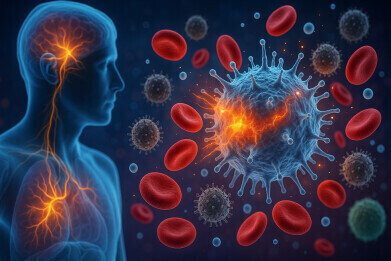
Columbia University-led research team has uncovered molecular evidence that chronic fatigue syndrome is driven by persistent immune dysfunction, metabolic disruption and inflammation. The findings highlight potential biomarkers and therapeutic targets and overlaps with Lyme disease and Long COVID
Patients with chronic fatigue syndrome – also known as myalgic encephalomyelitis (ME/CFS) – have been shown to display heightened immune responses to bacteria, viruses and fungi. While this response is vital to fight infection, it can result in tissue damage if prolonged or uncontrolled.
Researchers at the Center for Infection and Immunity at Columbia University Mailman School of Public Health, New York – working with a multicentre team of specialists – have now reported molecular-level details of how ME/CFS sustains inflammation and immune activity. The research may inform the development of targeted therapies to reduce symptoms of the syndrome and related postinfectious conditions, including post-treatment Lyme disease and Long COVID.
Symptoms of ME/CFS include unexplained fatigue, post-exertional malaise and cognitive dysfunction. The United States Centres for Disease Control and Prevention has estimated that up to 3.3 million Americans live with the condition, which carries an annual economic burden of as much as $51bn. Once dismissed as psychosomatic, there is now abundant evidence from blood, muscle and brain studies that have confirmed ME/CFS is a physical disorder.
Most patients report an influenza-like illness prior to onset, which led researchers to propose that the syndrome stems from an abnormal response to infection, producing inflammation and cellular damage that impair energy metabolism. The overlap in symptoms between ME/CFS and Long COVID further supports infection as a trigger.
In this study, blood samples from 56 patients with ME/CFS and 52 healthy controls in New York and California were analysed. The researchers mapped the metabolome – the complete set of metabolites in cellular metabolism – and the proteome, alongside immune responses to simulated infection before and after exercise.
Analysis revealed interconnected pathological processes typical of chronic inflammatory disorders, pointing to systemic metabolic dysfunction, immune dysregulation and tissue injury.
The disrupted processes included:
- Impaired energy production, leading to exhaustion and the accumulation of toxic metabolites.
- Lipid abnormalities that drive tissue damage and perpetuate inflammation.
- Disturbances in the extracellular matrix which regulates structural support and inflammatory signalling.
- Breakdown of epithelial barriers – particularly in the gut – which promotes dysbiosis and the translocation of bacterial products into the blood.
- Overactivation of the complement system of innate immunity, contributing to tissue damage and sustained fatigue.
- Impairment of copper-dependent antioxidant pathways, heightening oxidative stress and tissue injury.
- Dysregulation of tryptophan–serotonin–kynurenine pathways, associated with impaired cognitive function.
When stimulated with bacterial or viral mimics such as lipopolysaccharide and poly I:C, peripheral blood mononuclear cells from ME/CFS patients produced markedly higher levels of interleukin-6, a central pro-inflammatory cytokine.
Additional stimulation with Staphylococcus enterotoxin B and heat-killed Candida albicans also triggered exaggerated cytokine release compared with healthy controls. These responses were most pronounced in women, particularly those aged 45 and over with lower levels of the sex hormone oestradiol.
“Our findings indicate that people with ME/CFS have dysregulated immune responses to common infections,” said Dr. Xiaoyu Che, co-first author.
The authors proposed that these findings could help to identify subtypes of ME/CFS and inform clinical trials of targeted treatments. Candidate medications include metformin, interleukin-37 and the mTOR inhibitor rapamycin for patients with heightened innate immunity; prebiotics and probiotics for those with microbial imbalance; 12,13-diHOME supplementation or GDF15-neutralising antibodies for individuals with disrupted lipid metabolism; 5-hydroxytryptophan or selective serotonin reuptake inhibitors for those with altered tryptophan metabolism; carnitine supplementation for patients with impaired lipid use; and oestrogen therapy to modulate inflammation in older women.
“These results suggest that specific intracellular pathways correlate with symptoms,” added co-first author Dr. Amit Ranjan.
“While what gives rise to ME/CFS remains obscure, understanding the ways it disrupts the body’s various biological processes on the molecular level is revealing biomarkers for specific subtypes that may inform clinical research and lead to targeted interventions,” said senior author Dr. W. Ian Lipkin.
For further reading please visit: 10.1038/s44324-025-00079-w


Digital Edition
Lab Asia Dec 2025
December 2025
Chromatography Articles- Cutting-edge sample preparation tools help laboratories to stay ahead of the curveMass Spectrometry & Spectroscopy Articles- Unlocking the complexity of metabolomics: Pushi...
View all digital editions








Events
Jan 21 2026 Tokyo, Japan
Jan 28 2026 Tokyo, Japan
Jan 29 2026 New Delhi, India
Feb 07 2026 Boston, MA, USA
Asia Pharma Expo/Asia Lab Expo
Feb 12 2026 Dhaka, Bangladesh




