-
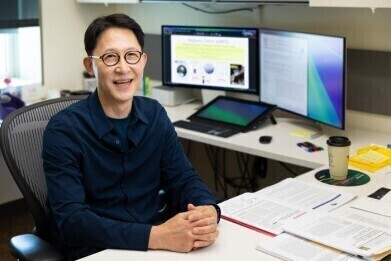 Jin-Woo Kim, Distinguished Professor of biological and agricultural engineering. Credit: Russell Cothren
Research news
University of Arkansas develops novel controlled release system for bioactive compounds
Aug 08 2025
Researchers from the Division of Agriculture at the University of Arkansas, United States, have developed a novel controlled release system that could improve the delivery of bioactive compounds such as probiotics and targeted drugs for human and animal health. The study describes the creation of robust microbeads using a composite of cellulose nanocrystals and alginate, which respond to the pH environment of the gastrointestinal tract to protect and (later) release their contents.
The team used cellulose nanocrystals derived from wood pulp and alginate extracted from brown algae to form micron-sized beads. These beads, approximately one hundredth the size of the finest beach sand grain, contract in acidic conditions such as the stomach to protect their bioactive cargo from acid and digestive enzymes. In the alkaline environment of the intestines, the beads expand to release their contents and then dissolve harmlessly.
The beads were produced using electrohydrodynamic extrusion, a technique not previously applied to this particular composite. The method enabled precise control of bead size and shape, addressing a common limitation in the development of controlled release systems.
“Probiotics are sensitive to acid [and] most will die in the stomach,” said Professor Jin-Woo Kim, senior author of the study and Distinguished Professor of Biological and Agricultural Engineering at the Arkansas Agricultural Experiment Station, the research arm of the University of Arkansas System Division of Agriculture.
Professor Kim also holds an appointment in Materials Science and Engineering in the College of Engineering.
The controlled release system is particularly suited to deliver probiotics to the gut, where they can support digestion and enhance immune function. Professor Kim has received funding from the Arkansas Research Alliance to explore the use of this system in animal feed, with the aim to reduce the need for antibiotics and cut production costs.
The industrial partner on this project is CelluDot, a biotechnology startup based at the Arkansas Research and Technology Park, Fayetteville, Arkansas. Its founder and chief executive, Joseph Batta-Mpouma, was first author of the paper.
Other contributors included Gurshagan Kandhola, CelluDot’s chief technology officer; Jaspreet Kaur, programme assistant in the Department of Food Science at the University of Arkansas; Dr Kayla Foley, postdoctoral researcher in chemical engineering; Professor Keisha Bishop Walters, also of the Department of Chemical Engineering; and Dr Nalinikanth Kotagiri from the James L. Winkle College of Pharmacy at the University of Cincinnati.
The research has the potential to refine drug delivery mechanisms and reduce reliance on conventional pharmaceutical interventions in both human and veterinary medicine.
For further reading please visit: 10.1016/j.carbpol.2025.123355


Digital Edition
Lab Asia Dec 2025
December 2025
Chromatography Articles- Cutting-edge sample preparation tools help laboratories to stay ahead of the curveMass Spectrometry & Spectroscopy Articles- Unlocking the complexity of metabolomics: Pushi...
View all digital editions








Events
Jan 21 2026 Tokyo, Japan
Jan 28 2026 Tokyo, Japan
Jan 29 2026 New Delhi, India
Feb 07 2026 Boston, MA, USA
Asia Pharma Expo/Asia Lab Expo
Feb 12 2026 Dhaka, Bangladesh




