Research news
Low-oxygen shown to slow Parkinson’s symptoms in mice
Aug 12 2025
Exposure to low-oxygen air has protected the brain and restored movement in mice with Parkinson’s-like disease, according to research by scientists at the Broad Institute of the Massachusetts Institute of Technology and Harvard, in collaboration with Mass General Brigham, Massachusetts, United States.
The team has reported that hypoxic conditions – which are analogous to the atmosphere experienced at the base camp of Mount Everest – can prevent and even reverse symptoms in a well-established mouse model of Parkinson’s disease.
Researchers found that mitochondrial dysfunction in Parkinson’s appears to trigger the accumulation of excess oxygen molecules in the brain. These reactive oxygen species are believed to drive the loss of neurons and impair movement. Sustained exposure to an environment with reduced oxygen has been shown to mitigate this effect, offering neuroprotection and functional recovery in affected animals.
“The fact that we actually saw some reversal of neurological damage is really exciting,” said Professor Vamsi Mootha, co-senior author and institute member at the Broad, who also holds appointments at Harvard Medical School and Massachusetts General Hospital.
“It tells us that there is a window during which some neurons are dysfunctional but not yet dead – and that we can restore their function if we intervene early enough,” he said.
“The results raise the possibility of an entirely novel paradigm for addressing Parkinson’s disease,” said co-senior author Professor Fumito Ichinose of Harvard Medical School and Massachusetts General Hospital.
The findings, however, are not immediately translatable to a clinical care setting. The team has cautioned that unsupervised exposure to low-oxygen air, particularly intermittent exposure such as during sleep, may be dangerous and could worsen symptoms in patients. However, the study offers a compelling proof of principle and could inform future drug development strategies that mimic the effects of hypoxia without exposing patients to physical oxygen deprivation.
The work builds on more than ten years of research into the protective role of hypoxia in mitochondrial disorders. Previous studies by Mootha and others have demonstrated that sustained hypoxic exposure can improve symptoms in rare mitochondrial diseases such as Leigh syndrome and Friedreich’s ataxia.
Mootha, who leads the Friedreich’s Ataxia Accelerator at the Broad Institute, said this had prompted his team to ask whether the same approach could benefit more common neurodegenerative conditions.
Parkinson’s disease affects more than 10 million people globally and causes progressive neuronal loss, typically accompanied by tremors and slowed movement. Affected neurons accumulate protein clumps known as Lewy bodies, which are thought to disrupt mitochondrial function. Mitochondria – the energy-producing components of the cell – are known to be sensitive to changes in oxygen availability, and the dysfunction seen in Parkinson’s may lead to excessive oxygen build-up, which in turn causes oxidative stress and cellular damage.
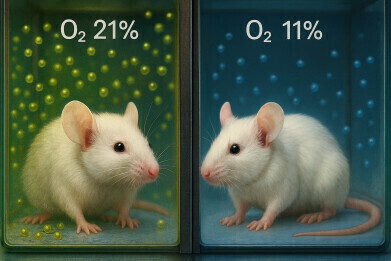
Mootha and Ichinose used a mouse model in which animals were injected with α-synuclein protein aggregates to induce Parkinson’s-like symptoms. One group of mice was housed under normal atmospheric oxygen levels – 21 percent – while another group was placed in hypoxic chambers with only 11 percent oxygen – comparable to the oxygen concentration at an altitude of around 4,800 metres.
Three months after the injections, the mice in the normal-oxygen group exhibited widespread neuronal loss, high levels of Lewy bodies and severe motor impairment. In contrast, mice kept continuously in low-oxygen conditions retained healthy neurons and displayed no motor deficits, despite also forming Lewy bodies. These results suggest that hypoxia does not prevent Lewy body formation but instead protects neurons from their toxic effects.
The researchers introduced hypoxia to another group six weeks after injection, when motor symptoms had already appeared. These mice showed marked improvement: motor function recovered, anxiety-like behaviours resolved, and neuronal loss was arrested.
Subsequent brain analysis revealed that mice with Parkinson’s symptoms had significantly elevated oxygen levels in specific brain regions, compared with both healthy controls and those exposed to hypoxia. The researchers have proposed that damaged mitochondria are unable to use oxygen efficiently, causing harmful oxygen accumulation. Reducing environmental oxygen intake limits this surplus, thereby preventing oxidative damage.
“Too much oxygen in the brain turns out to be toxic.
“By reducing the overall oxygen supply, we’re cutting off the fuel for that damage,” said Mootha.
Although the present findings are not yet ready to inform treatment protocols, the team is developing experimental ‘hypoxia in a pill’ drugs to replicate the effects of oxygen restriction without the risks associated with breathing low-oxygen air. Such therapies are already under investigation for mitochondrial disorders and may hold promise for some neurodegenerative diseases.
The hypoxia-based approach has now yielded promising results in mouse models of Parkinson’s disease, Leigh syndrome, Friedreich’s ataxia and accelerated ageing, although it has not proven effective across all forms of neurodegeneration.
“It may not be a treatment for all types of neurodegeneration but it’s a powerful concept – one that might shift how we think about treating some of these diseases,” said Mootha.
The first author of the study, Dr Eizo Marutani, is an instructor in anaesthesia at Massachusetts General Hospital and Harvard Medical School.
For further reading please visit: 10.1038/s41593-025-02010-4



Digital Edition
Lab Asia Dec 2025
December 2025
Chromatography Articles- Cutting-edge sample preparation tools help laboratories to stay ahead of the curveMass Spectrometry & Spectroscopy Articles- Unlocking the complexity of metabolomics: Pushi...
View all digital editions









Events
Jan 21 2026 Tokyo, Japan
Jan 28 2026 Tokyo, Japan
Jan 29 2026 New Delhi, India
Feb 07 2026 Boston, MA, USA
Asia Pharma Expo/Asia Lab Expo
Feb 12 2026 Dhaka, Bangladesh




