-
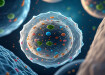
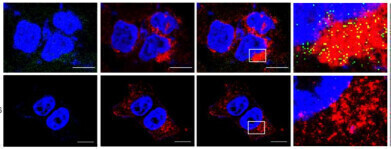 New drug design enhances uptake of large molecule cancer drugs. Credit: Duke University School of Medicine
Research news
Hacking cell entry could drive uptake of large molecule drugs
May 01 2025
Rule-breaking drug design takes advantage of CD36-dependent pathway
A research team of scientists from Duke University School of Medicine, University of Texas Health Science Center at San Antonio, and the University of Arkansas has discovered in mouse models how to improve the uptake of larger molecules that can’t enter cells because of their size.
The ‘hack’ works by using a protein called CD36 that helps pull substances into cells. By designing drugs to use this CD36 pathway, researchers delivered approximately between 7 and 22 times more of the drug inside the cancer cells, making the treatment almost 23 times more effective. The mouse studies showed that this enhanced uptake led to stronger tumour suppression without making the drugs harder to dissolve or less stable.
CD36 is a protein abundantly found on the surface of cells in the intestine, skin, lungs, eyes and also in the brain.
The experimental method is called ‘chemical endocytic medicinal chemistry’ and takes advantage of a natural process where cells will ‘swallow’ molecules by virtue of endocytosis. It could change the future of drug design – especially for drugs once thought to be too big to be effective.
“This discovery … could rescue many drugs that were previously considered unusable due to poor absorption and turn them into clinically useful treatments for diseases,” said study author Professor Hui-Kuan Lin, a cancer biology researcher in the Department of Pathology at Duke University School of Medicine.
Drug development aften focuses on improving the way investigation new drugs can pass through cell membranes under passive diffusion. The experimental strategy follows a different route: using cell surface receptors like CD36 to actively bring drugs inside.
The technique was particularly successful for a class of complex, large-sized drugs known as bRo5 molecules (PROTACS), a type of targeted cancer therapy that breaks down proteins in cells.
These molecules usually find it difficult to get into cells because of their large size – more than 500 dalton (Da). Indeed, it was unclear how they entered cells at all. In this study, the PROTACs tested were larger than 1,000 Da considered to be enormous by pharmaceutical standards.
The modified PROTACs not only entered cells better but were also more effective at fighting tumours – and still maintain their stability and solubility – requirements for effective medicines.
Previously in drug development drugs larger than 500 Da are generally ineffective because they can’t enter cells.
“This was completely unexpected in the research field,” said Professor Hong-yu Li, PhD, of medicinal chemistry and chemical biology in the Department of Pharmacology at UT-San Antonio and a study author.
“For decades it was thought that molecules this large couldn’t cross membranes effectively, since the endocytic cellular uptake of chemical compounds was unknown,” Li said.
“Through chemistry and biology, we identified CD36 as a protein for uptake and optimized drugs better engaging with CD36 to internalize these drugs to more efficiently reach target protein,” he added.
The results were independently reproduced by each of the teams involved in the study, including lab work led by study author, Dr. Zhiqiang Qin, associate professor of pathology at University of Arkansas for Medical Sciences.
The findings will need to undergo further testing and evaluation in clinical trials before the strategy can be used in medications given to patients during cancer treatment.
But the new drug design extends beyond cancer treatment. Researchers say the findings suggest that many other large and complex drugs could be improved using the same strategy.
Additional study authors include co-lead authors Zhengyu Wang, of UT-San Antonio, and Bo-Syong Pan and Rajesh Kumar Manne, of Duke.
For further reading please visit: 10.1016/j.cell.2025.03.036

Digital Edition
Lab Asia Dec 2025
December 2025
Chromatography Articles- Cutting-edge sample preparation tools help laboratories to stay ahead of the curveMass Spectrometry & Spectroscopy Articles- Unlocking the complexity of metabolomics: Pushi...
View all digital editions








Events
Jan 21 2026 Tokyo, Japan
Jan 28 2026 Tokyo, Japan
Jan 29 2026 New Delhi, India
Feb 07 2026 Boston, MA, USA
Asia Pharma Expo/Asia Lab Expo
Feb 12 2026 Dhaka, Bangladesh




