-
-
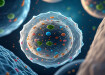
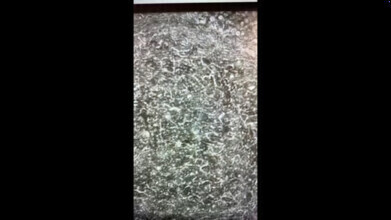 A human airway organoid under a light microscope in the labs at Texas Biomed. The organoids have grown cilia, which are fine, hair-like structures that line the interior of the airway. Credit: Texas Biomed.
Research news
Bird flu vaccine shows promise as scientists uncover how H5N1 damages human airways
Sep 11 2025
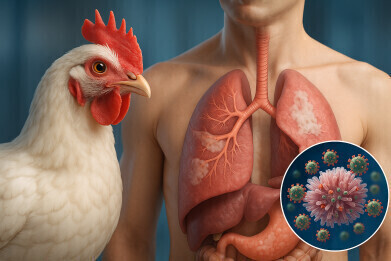
A research team from the Texas Biomedical Research Institute, San Antonio, Texas, has reported progress in the development of vaccine candidates against bird flu and identified potential treatment targets through the use of miniature three-dimensional models of human airways.
Led by Professor Luis Martinez-Sobrido and staff scientist Dr Ahmed M. Elsayed, they have reported that have developed a proof-of-concept live attenuated vaccine. The formulation contains a weakened version of the avian influenza virus that has been affecting poultry and dairy cattle in the epidemic across the United States since March 2024. In animal models, a single dose provided complete protection against the highly pathogenic H5N1 which has otherwise proved lethal in mice.
“The ultimate aim is to develop a vaccine that could protect against multiple strains of bird flu, or even offer universal protection,” said Dr Elsayed.
The researchers are now working to adapt the vaccine to target strains circulating in regions where the virus is endemic. Highly pathogenic avian influenza, which is naturally carried by migratory birds and waterfowl, can devastate farmed flocks of chickens and turkeys.
H5N1 has already made the zoonotic jump to a wide range of mammals, from sea lions to cats and cattle. In the United States, the current outbreak has infected more than 70 people and caused at least one death. On 6 January 2025, the Louisiana Department of Health confirmed that a person aged over 65, with underlying health conditions and prior contact with infected backyard birds, had died from an H5N1 infection.
Although emergency vaccine stockpiles exist, they are based on inactivated, older strains of influenza virus.
“Those vaccines have [been] shown to work against the current strain of H5N1.
“However, live attenuated vaccines can offer longer lasting and more robust protection,” said Professor Martinez-Sobrido.
In parallel, scientists at Texas Biomed have published work showing how the present strain of H5N1 remodels the cells lining the human airway, causing the formation of scar tissue. Professor Martinez-Sobrido and staff scientist Dr Hussin Rothan identified a therapeutic target that could help reduce inflammation during influenza infection.
For this project, the team used human airway organoids – miniature laboratory models containing the four key cell types of the tracheal lining.
“They create mucus, and you can see the cilia move under the microscope,” said Dr Rothan.
“We can get much more detailed insight into tissue responses from these organoids than we can from single cell lines.”
When exposed to the H5N1 virus first detected in Texas cattle in 2024, the organoids showed marked inflammatory responses, including high cytokine production and the development of fibrotic tissue. The response was significantly stronger than that observed with a seasonal swine flu strain, H1N1.
The researchers found that briefly inhibiting the Rho-associated kinase (ROCK) pathway reduced the severity of scarring. Specifically, inhibiting the enzyme ROCK1 proved more effective than targeting ROCK2.
“This was surprising because people usually focus on ROCK2. We now need to drill down and find out more about these interactions so we can find the most effective way to limit inflammation, not only for bird flu, but other respiratory viruses that affect the airway and lungs like SARS-CoV-2,” said Dr Rothan.
Texas Biomed, based in San Antonio, is a non-profit research institute dedicated to infectious disease prevention through basic research, preclinical testing and global partnerships. Its scientists have contributed to the development of the first COVID-19 vaccine, the first treatment for Ebola and the first therapy for Hepatitis C. The vaccine research received support from the Texas Biomedical Forum through a pilot grant awarded to Dr Elsayed.
For further reading please visit: 10.1038/s41541-025-01207-9


Digital Edition
Lab Asia Dec 2025
December 2025
Chromatography Articles- Cutting-edge sample preparation tools help laboratories to stay ahead of the curveMass Spectrometry & Spectroscopy Articles- Unlocking the complexity of metabolomics: Pushi...
View all digital editions









Events
Jan 21 2026 Tokyo, Japan
Jan 28 2026 Tokyo, Japan
Jan 29 2026 New Delhi, India
Feb 07 2026 Boston, MA, USA
Asia Pharma Expo/Asia Lab Expo
Feb 12 2026 Dhaka, Bangladesh




