-
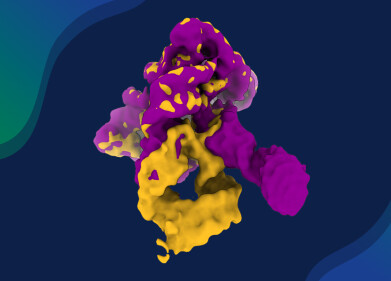
 Ancestral uricase genetic material was inserted into human liver cells using CRISPR-Cas9. This is been lost to humans and great apes. Credit: AJGB
Research news
Georgia State scientists revive ancient gene to target gout and fatty liver disease
Sep 08 2025
Gout – a form of arthritis caused by the build-up of uric acid crystals in joints – is one of humanity’s oldest known diseases. Now, scientists at Georgia State University, Atlanta, have reported that an ancient gene, lost to humans millions of years ago, could offer a way to prevent it.
In their research the team used CRISPR gene editing to reconstruct and reactivate the gene that can produce uricase, an enzyme that breaks down uric acid. Most animals retain the gene for uricase, but humans and other apes lost it between 20 and 29 million years ago.
Some researchers have suggested that higher uric acid levels once helped primates convert fruit sugar into fat, offering a survival advantage during times of scarcity. Today, however, excess uric acid contributes to modern conditions including gout, kidney disease and metabolic disorders.
“Without uricase, humans are left vulnerable,” said Professor Eric Gaucher, a biologist at Georgia State and co-author of the study.
“We wanted to see what would happen if we reactivated the broken gene,” he said.
Gaucher and postdoctoral researcher Dr Lais de Lima Balico inserted a reconstructed ancestral uricase gene into human liver cells using CRISPR-Cas9. The cells showed a marked reduction in uric acid and were protected against fructose-driven fat accumulation.
When the team tested the approach in three-dimensional liver spheroids that mimic organ behaviour, the uricase enzyme not only lowered uric acid but also targeted peroxisomes, where uricase normally functions.
“By reactivating uricase in human liver cells, we lowered uric acid and stopped the cells from turning excess fructose into triglycerides – the fats that build up in the liver,” Gaucher said.
The implications extend beyond gout. High uric acid – or hyperuricaemia – is associated with cardiovascular disease and hypertension and has been compared by some researchers to high cholesterol in terms of risk. Data show that about a quarter to half of patients with high blood pressure also have elevated uric acid, while in newly diagnosed cases of hypertension the overlap rises to 90 per cent.
“Hyperuricaemia is a dangerous condition,” Gaucher said.
“By lowering uric acid, we could potentially prevent multiple diseases at once,” he added.
Current therapies for gout are not effective in all patients and some develop adverse reactions to synthetic uricase. A genome-editing approach may provide a long-term solution by restoring uricase directly in liver cells.
“Our genome-editing approach could allow patients to live gout-free lives and potentially prevent fatty liver disease,” Gaucher said.
The team will next move to animal studies before potential human trials. Possible delivery methods include direct injection, the reinfusion of modified liver cells, or lipid nanoparticles, the technology used in some COVID-19 vaccines. Gaucher cautioned, however, that significant challenges remain.
“Genome-editing still faces substantial safety concerns,” he said.
“Once those are addressed, society will be faced with contentious ethical discussions about who should and should not have access.”
For further reading please visit: 10.1038/s41598-025-10551-8



Digital Edition
Lab Asia Dec 2025
December 2025
Chromatography Articles- Cutting-edge sample preparation tools help laboratories to stay ahead of the curveMass Spectrometry & Spectroscopy Articles- Unlocking the complexity of metabolomics: Pushi...
View all digital editions









Events
Jan 21 2026 Tokyo, Japan
Jan 28 2026 Tokyo, Japan
Jan 29 2026 New Delhi, India
Feb 07 2026 Boston, MA, USA
Asia Pharma Expo/Asia Lab Expo
Feb 12 2026 Dhaka, Bangladesh




