Research news
Single injection at birth may offer long-term protection against HIV, study in primates shows
Aug 07 2025
A brief window of opportunity in early life may hold the key to long-term protection against HIV and other infectious diseases through gene therapy
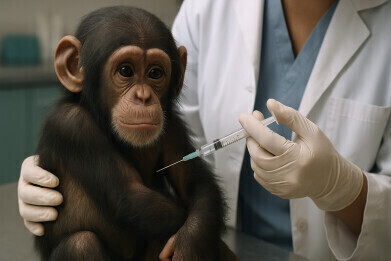
A single gene therapy injection delivered at birth may protect infants against HIV for many years. The study has identified a brief but critical window during early life in which the immune system is more receptive to such treatment – an insight that could transform approaches to paediatric infectious disease prevention in high-risk settings.
The research, led by Associate Professor Amir Ardeshir of the Tulane National Primate Research Center in collaboration with colleagues at the California National Primate Research Center, has demonstrated that a one-time administration of gene therapy during the first month of life conferred protection from HIV for at least three years in nonhuman primates. This therapeutic window aligns with a natural period of immune tolerance in early infancy, which the study team suggests may be optimal for successful delivery of gene-based interventions.
“Nearly 300 children are infected with HIV each day. This approach could help protect newborns in high-risk areas during the most vulnerable period of their lives,” said Ardeshir.
The gene therapy programme used an adeno-associated virus – a non-pathogenic viral vector – to deliver genetic instructions to muscle cells. These cells were engineered to produce broadly neutralising antibodies (bNAbs), a class of antibodies capable of targeting multiple HIV strains. Previous investigations have confirmed the efficacy of bNAbs, but their application has typically required repeated infusions, which are impractical and costly in low-resource environments.
“Instead, we turn muscle cells – which are long-lived – into microfactories that just keep producing these antibodies,” Ardeshir explained.
Animals that received the therapy within their first four weeks of life displayed durable expression of bNAbs and remained protected during simulated HIV exposures modelled after breastfeeding and sexual transmission. By contrast, older animals treated at eight to twelve weeks showed signs of immune rejection, having developed antibodies against the therapy itself.
The findings suggest that neonatal immune systems not only tolerate gene therapy more readily but also permit sustained antibody expression. In an additional observation, the researchers found that in utero exposure to bNAbs could prime the immune system to accept gene therapy administered after birth, though the birth-time injection remained the more practical intervention in real-world contexts.
“This is a one-and-done treatment that fits the critical time when these mothers with HIV in resource-limited areas are most likely to see a doctor.
“As long as the treatment is delivered close to birth, the baby’s immune system will accept it and believe it’s part of itself,” said Ardeshir.
The study has raised questions regarding the translation of these findings to human infants, particularly given known differences in response to adeno-associated viral vectors. Furthermore, the researchers employed only one strain of simian–human immunodeficiency virus, which does not reflect the full diversity of HIV strains in circulation globally.
Nonetheless, the approach offers a potentially transformative model not only for HIV prevention but also for other infectious diseases that disproportionately affect children in low-income regions, including malaria.
More than 100,000 children acquire HIV each year, primarily via mother-to-child transmission during breastfeeding. While antiretroviral therapies have been successful in reducing transmission and managing the disease, adherence and access tend to decline after childbirth particularly in sub-Saharan Africa, where nearly 90% of paediatric HIV cases occur.
“Nothing like this was possible to achieve even 10 years ago. This was a huge result, and now we have all the ingredients to take on HIV,” added Ardeshir.
For further reading please visit: 10.1038/s41586-025-09330-2


Digital Edition
Lab Asia Dec 2025
December 2025
Chromatography Articles- Cutting-edge sample preparation tools help laboratories to stay ahead of the curveMass Spectrometry & Spectroscopy Articles- Unlocking the complexity of metabolomics: Pushi...
View all digital editions









Events
Jan 21 2026 Tokyo, Japan
Jan 28 2026 Tokyo, Japan
Jan 29 2026 New Delhi, India
Feb 07 2026 Boston, MA, USA
Asia Pharma Expo/Asia Lab Expo
Feb 12 2026 Dhaka, Bangladesh




