-
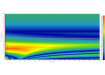
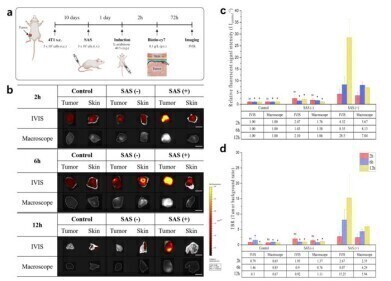 Fluorescent imaging results from SAS-based fluorescence-guided surgery in animal models. Tumour and surrounding skin tissue were separated after imaging with the IVIS Macroscope to analyse the tumour-to-background ratio. Credit: Korea Institute of Science and Technology.
Research news
Tumour-targeting fluorescent bacteria aid real-time imaging in cancer surgery
Jul 29 2025
Engineered bacteria capable of illuminating tumour sites during surgery offer potential to improve precision and reduce recurrence of cancers
Accurate excision of malignant tissue remains one of the most critical aspects of surgical oncology, yet clinical outcomes continue to be constrained by difficulties in real-time tumour localisation. In breast cancer, for example, the rate of positive surgical margins – where cancerous cells persist at the excision boundary – can reach as high as 35 percent. This often necessitates repeat operations and heightens the risk of cancer recurrence.
Conventional approaches such as preoperative imaging or intraoperative ultrasound are frequently inadequate in definitively outlining tumour boundaries, leaving surgeons to depend heavily on their clinical judgement. These limitations have underscored a pressing need to enable real-time, tumour visualisation in the operating theatre.
A collaborative research team, led by Dr SeungBeum Suh of the Centre for Bionics and Dr Sehoon Kim of the Centre for Chemical and Biological Convergence at the Korea Institute of Science and Technology (KIST), in Seoul, together with Professor Hyo-Jin Lee of Chungnam National University Hospital, in Daejeon, South Korea, has developed a novel intraoperative imaging technology that uses engineered probiotic bacteria as fluorescent contrast agents.
These bacteria accumulate within the tumour microenvironment and emit a strong fluorescent signal – allowing surgeons to observe cancerous tissue visually – even under standard surgical lighting conditions.
The research team has created a bacterial system that activates selectively within hypoxic tumour regions, enabling the clear identification of both the location and the boundaries of malignant tissue in vivo. The fluorescent signal has been shown to persist for more than 72 hours and is sufficiently intense to distinguish tumours embedded deep within complex internal anatomy. In effect, the platform illuminates tumour sites in situ much like a neon sign, supporting immediate and intuitive surgical decision-making.
Unlike conventional contrast agents, which typically require disease-specific molecular targeting, this bacterial system harnesses two features common to most solid tumours – hypoxia and immune evasion – which should permit broad use across multiple cancer types. The signal produced operates in the near-infrared spectrum, ensuring compatibility with existing surgical imaging equipment, including endoscopes and robotic systems. The fluorescence intensity is approximately fivefold greater than that of standard agents, further enhancing visual clarity.
The platform is now undergoing integration with commercially available fluorescence-guided surgery systems and intraoperative robots. Such compatibility is expected to facilitate both clinical adoption and commercial development. By enabling real-time tumour mapping, the technology may contribute to shorter procedure times, improved surgical precision and a reduction in local recurrence rates.
The research team intends to evolve the bacterial system beyond diagnostic imaging. Future applications may include the delivery of targeted therapeutics such as anticancer drugs or recombinant proteins, exploiting the bacteria’s inherent tumour-seeking behaviour.
“The study demonstrates a novel approach in which bacteria autonomously locate tumours and emit fluorescent signals, allowing real-time identification of tumour location and boundaries during surgery.
“[The] applicability [of the platform] across a range of solid tumours positions it as a potential new standard for precision surgical imaging,” said Dr Suh of KIST.
The platform remains under development, but its demonstrated capabilities and broad applicability suggest it may soon represent a significant advance in fluorescence-guided oncological surgery.
For further reading please visit: 10.1002/adma.202504389

Digital Edition
Lab Asia Dec 2025
December 2025
Chromatography Articles- Cutting-edge sample preparation tools help laboratories to stay ahead of the curveMass Spectrometry & Spectroscopy Articles- Unlocking the complexity of metabolomics: Pushi...
View all digital editions


Events
Jan 21 2026 Tokyo, Japan
Jan 28 2026 Tokyo, Japan
Jan 29 2026 New Delhi, India
Feb 07 2026 Boston, MA, USA
Asia Pharma Expo/Asia Lab Expo
Feb 12 2026 Dhaka, Bangladesh