Research news
COVID-19 vaccine programmes have prevented more than 2.5 million deaths
Aug 06 2025
Work led by scientists from the Università Cattolica del Sacro Cuore and Stanford University shows vaccinations have saved 14.8 million years of life
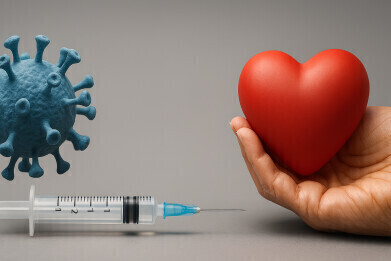
Vaccination against severe acute respiratory syndrome coronavirus 2 – SARS-CoV-2, more commonly known as COVID-19 – has prevented more than 2.5 million deaths worldwide between 2020 and 2024, according to a comprehensive international study. The findings indicate that one life was saved for every 5,400 doses of vaccine administered, while the total number of years of life preserved is estimated at 14.8 million – equivalent to one year of life saved per 900 vaccine doses.
The study, led by Professor Stefania Boccia of the Università Cattolica del Sacro Cuore in Rome in collaboration with colleagues from Stanford University in the United States, represents the most extensive global analysis to date of the long-term impact of SARS-CoV-2 vaccination. It has used global datasets to evaluate both lives saved and years of life gained, encompassing all pandemic phases including the emergence and spread of the Omicron variant.
Eighty-two percent of the lives saved were among individuals vaccinated before their first encounter with the virus, with 57% of the protective effect occurring during the Omicron period. Older adults were the primary beneficiaries of the vaccination campaign: 90% of deaths averted were among individuals aged 60 years and above. Notably, 76% of the life-years saved occurred in this same age group.
The analysis was conducted by a team based at the Università Cattolica, including Dr Angelo Maria Pezzullo, Researcher in General and Applied Hygiene, and Dr Antonio Cristiano, a medical resident in Hygiene and Preventive Medicine. Both contributed to the project during their time at Stanford University, working alongside Professor John P.A. Ioannidis, Director of the Meta-Research Innovation Center at Stanford (METRICS). The study formed part of the ‘European network staff exchange for integrating precision health in the health care systems’ (ExACT), funded by the European Research Excellence Programme RISE project – Marie Skłodowska-Curie Actions – and coordinated by Professor Boccia.
“Previous investigations attempted to estimate the number of lives saved by COVID-19 vaccines, but used different models, focused on limited periods, or confined their analysis to specific geographical areas.
“This study is the most comprehensive to date, incorporating global data, accounting for the Omicron period, and quantifying not only deaths prevented but also life-years saved. It also relies on fewer assumptions regarding pandemic dynamics,” stated Professor Boccia.
The research team applied a range of statistical methods to global population data to assess the timing of SARS-CoV-2 infections relative to vaccination and variant circulation. They then compared observed mortality patterns with a modelled counterfactual scenario in which no COVID-19 vaccines had been deployed.
“By analysing who was infected and when, alongside outcomes by age group and care setting, we were able to isolate the impact of vaccination on survival and longevity.
“We modelled a scenario in which no vaccinations had taken place and quantified the difference,” explained Dr Pezzullo.
The study has also revealed striking demographic patterns. Despite the high vulnerability of residents in long-term care facilities, this group accounted for only 2% of total life-years saved. Children and adolescents contributed 0.01% of the lives saved and 0.1% of the life-years gained, while young adults aged 20–29 contributed just 0.07% and 0.3% respectively.
“Our findings are more conservative than earlier estimates that focused mainly on the first year of global vaccine deployment, yet they clearly show the substantial and sustained benefit of COVID-19 vaccination across the entire 2020–2024 period.
“The greatest gains have been achieved for the most vulnerable segments of the population – particularly older adults – who have experienced the highest burden of disease and mortality,” concluded Professor Boccia.
Digital Edition
Lab Asia Dec 2025
December 2025
Chromatography Articles- Cutting-edge sample preparation tools help laboratories to stay ahead of the curveMass Spectrometry & Spectroscopy Articles- Unlocking the complexity of metabolomics: Pushi...
View all digital editions





Events
Jan 21 2026 Tokyo, Japan
Jan 28 2026 Tokyo, Japan
Jan 29 2026 New Delhi, India
Feb 07 2026 Boston, MA, USA
Asia Pharma Expo/Asia Lab Expo
Feb 12 2026 Dhaka, Bangladesh