-
-
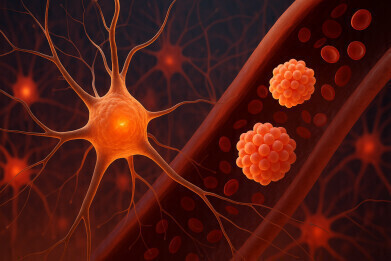
 Hypothalamus neurons support regulation of night time glucose levels. Credit: Angel Ren
Research news
University of Michigan study reveals how brain neurons regulate blood sugar in everyday conditions
Aug 22 2025
“Most studies have shown that this region is involved in raising blood sugar during emergencies,” said Dr. Alison Affinati, assistant professor of internal medicine at the University of Michigan and member of the Caswell Diabetes Institute, Ann Arbor, Michigan.
“We wanted to understand whether it is also important in controlling blood sugar during day-to-day activities because that is when diabetes develops,” she added.
Researchers at the University of Michigan have reported that a specific population of neurons in the hypothalamus – VMHCckbr neurons – help the brain regulate blood glucose levels in routine circumstances. The findings have provided new insight into the role of the nervous system in metabolic control.
For more than five decades, scientists have known that dysfunction of the nervous system can lead to fluctuations in blood glucose, particularly in patients with diabetes. The ventromedial nucleus of the hypothalamus, a region that governs hunger, fear, temperature regulation and sexual activity, has been linked to blood sugar control.
In the current study, the research group focused on VMHCckbr neurons, which contain a protein known as the cholecystokinin b receptor.
To investigate their function, the team used mouse models in which these neurons were inactivated. They found that VMHCckbr neurons are essential to the maintenance of stable glucose levels during normal activities, particularly in the early fasting period between the last meal of the day and waking in the morning.
“In the first four hours after you go to bed, these neurons ensure that you have enough glucose so that you do not become hypoglycaemic overnight,” she said.
The mechanism involves directing the body to burn fat through lipolysis, a process in which fats break down to produce glycerol. This glycerol is then converted into glucose. When the researchers activated VMHCckbr neurons in mice, glycerol levels rose.
The team suggested that this mechanism may help to explain why patients with prediabetes often show increased lipolysis during the night. They proposed that the neurons may be overactive in such patients – experienced as the so called ‘dawn phenomenon’ – contributing to higher blood glucose levels in the morning.
Importantly, the researchers found that VMHCckbr neurons only regulated lipolysis. This indicates that other neuronal populations in the hypothalamus may control glucose through different mechanisms.
“Our studies show that the control of glucose is not an on-or-off switch as previously thought.
“Different populations of neurons work together, and everything gets turned on in an emergency. However, under routine conditions, it allows for subtle changes,” Affinati said.
The team has stated that it now aims to determine how different neurons within the ventromedial nucleus co-ordinate their functions to regulate glucose during fasting, feeding and stress. They are also exploring how the brain and nervous system influence sugar regulation in the liver and pancreas.
For further reading please visit: 10.1016/j.molmet.2025.102216



Digital Edition
Lab Asia Dec 2025
December 2025
Chromatography Articles- Cutting-edge sample preparation tools help laboratories to stay ahead of the curveMass Spectrometry & Spectroscopy Articles- Unlocking the complexity of metabolomics: Pushi...
View all digital editions










Events
Jan 21 2026 Tokyo, Japan
Jan 28 2026 Tokyo, Japan
Jan 29 2026 New Delhi, India
Feb 07 2026 Boston, MA, USA
Asia Pharma Expo/Asia Lab Expo
Feb 12 2026 Dhaka, Bangladesh




