Research news
High levels of antihistamines can reduce fitness gains
Jun 26 2025
New research points to hidden connection between allergies and exercise
Histamine, a molecule most commonly associated with allergic symptoms such as runny noses and itchy eyes, also plays a key role in exercise performance and recovery, according to a study from the University of Oregon, Washington. The research suggests that high doses of antihistamine medication can significantly diminish gains in aerobic fitness.
The study highlights histamine’s role beyond immune responses, showing that it supports the body’s adaptation to physical stress during aerobic activity. Blocking histamine at elevated levels was shown to cut improvements by half in cardiovascular fitness during a structured exercise programme. The effect of over-the-counter antihistamines taken at standard doses remains unclear.
Histamine is a signalling molecule found across a wide range of organisms, from single-celled species to humans. In people, it helps trigger inflammation – part of the immune system’s response to stress or allergens.
“In exercise, it actually seems to be playing a very similar role of facilitating our adaptation to stress,” said Professor John Halliwill, a human physiologist at the University of Oregon and co-author of the study.
During allergic reactions, histamine is released by immune cells known as mast cells in response to allergens such as pollen. The resulting inflammation causes common allergy symptoms. Antihistamines, such as loratadine and cetirizine, are used to suppress this response.
Inflammation is also vital to fitness improvement, as exercise causes microscopic muscle damage that triggers repair and muscle growth. Halliwill and colleagues found that when histamine was blocked, gains in aerobic capacity were significantly reduced.
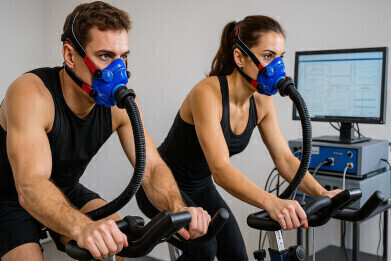
The researchers monitored 16 adult participants over six weeks, all of whom undertook cycling sessions on stationary bikes three or four times weekly. Half the participants were given high doses of antihistamines before each session, while the rest received a placebo. The results showed that those in the placebo group improved their cycling performance by twice as much as the antihistamine group. Measures of blood flow adaptation were also markedly better in the placebo group.
There was, however, little difference in the two groups’ changes in maximum oxygen consumption, or VO₂ max – a key measure of aerobic fitness. Halliwill noted that the study’s small sample size or short duration might have limited the ability to detect significant differences in VO₂ max.
The role of histamine in exercise responses was first proposed in the 1970s, but only in the last decade has the hypothesis been actively revisited. Like an allergic reaction, the process begins with mast cells – present throughout skeletal muscle – releasing histamine when muscles are under strain. The precise trigger for this release remains unknown.
Once released, histamine dilates blood vessels, increasing circulation to working muscles. Even after activity ends, histamine continues to promote beneficial immune responses that aid muscle recovery and adaptation.
“We have got a whole village of cell types that are turning on programmes to remodel and restructure and improve the function of the skeletal muscle-organ system,” said Halliwill.
“Mast cells and the histamine that they release are a major coordinator of all those cell types,” he added.
Histamine also appears to regulate gene expression during physical activity. The study found that blocking histamine suppressed the activation of roughly one quarter of the approximately 3,000 exercise-responsive genes, likely limiting the production of proteins important for fitness improvements.
The findings align with those from a separate study on antihistamines and high-intensity interval training, which also reported diminished fitness gains. Halliwill believes the results may extend to a variety of aerobic exercises including running, swimming and cycling.
Nonetheless, he cautioned against immediate changes in the use of allergy medication. The studies to date have relied on antihistamine doses far exceeding typical over-the-counter levels. Further research is needed to determine whether everyday antihistamine use could impair exercise adaptation.
For further reading please visit: 10.1152/japplphysiol.00687.2024




Digital Edition
Lab Asia Dec 2025
December 2025
Chromatography Articles- Cutting-edge sample preparation tools help laboratories to stay ahead of the curveMass Spectrometry & Spectroscopy Articles- Unlocking the complexity of metabolomics: Pushi...
View all digital editions










Events
Jan 21 2026 Tokyo, Japan
Jan 28 2026 Tokyo, Japan
Jan 29 2026 New Delhi, India
Feb 07 2026 Boston, MA, USA
Asia Pharma Expo/Asia Lab Expo
Feb 12 2026 Dhaka, Bangladesh




