-
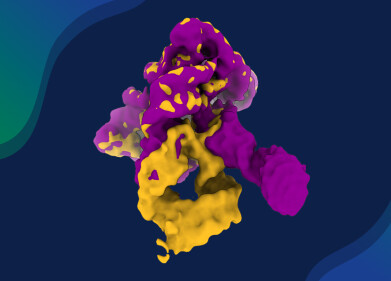
 An AI-generated representation of T cell and herpes virus inside the human body. Credit: A.Booth via Chat GPT
Research news
Researchers engineer herpes virus to enhance T cell activity for cancer immunotherapy
Jun 11 2025
The technique could be developed into a novel oncology treatment vector
A team at the University of Michigan (U-M) has developed a novel approach to cancer immunotherapy by reprogramming a herpes virus to stimulate T cells, a key component of the immune system. The technique, which centres on sustaining T cell function in the hostile tumour environment, could offer a promising route to improving treatment outcomes in cancer patients.
The research focuses on the herpes virus saimiri – a virus that naturally infects the T cells of squirrel monkeys. Scientists in the laboratory of Dr Adam Courtney, within the Department of Pharmacology and the U-M Rogel Cancer Centre, identified the virus as a source of proteins capable of activating critical signalling pathways within human T cells.
T cells play a pivotal role in the body’s immune response, targeting infected or cancerous cells. However, in the context of cancer, tumours often suppress these immune responses, limiting the therapeutic potential of T cells. Existing strategies such as CAR-T therapy aim to direct T cells to attack specific cancer cells, but their efficacy can be hindered by the immunosuppressive tumour microenvironment.
The Michigan researchers engineered a viral protein variant derived from the herpesvirus to target LCK, a kinase present in resting T cells. This modified protein was designed to recruit LCK in order to activate STAT5, a transcription factor involved in T cell survival and function. Activation of the JAK–STAT5 pathway, often triggered by cytokines such as interleukin-2 (IL-2), has been shown to enhance T cell responses against cancer cells.
By directly activating STAT5, the engineered viral protein successfully sustained T cell activity in mouse models of melanoma and lymphoma. The findings suggest that viral genes—evolved to manipulate cellular processes—can be harnessed to improve the performance of T cells in cancer therapy.
The study's first author is Yating Zheng, a doctoral candidate in the Department of Pharmacology at the U-M Medical School. Additional authors include Zehui Gu, Claire E. Shudde, Taylor L. Piper, Xinyu Wang, Grace A. Aleck, Jiajia Zhou, Dana King, Monica K. Chanda, Lilliana Trinch and Weiping Zou.
For further reading please visit: 10.1126/sciimmunol.adn9633



Digital Edition
Lab Asia Dec 2025
December 2025
Chromatography Articles- Cutting-edge sample preparation tools help laboratories to stay ahead of the curveMass Spectrometry & Spectroscopy Articles- Unlocking the complexity of metabolomics: Pushi...
View all digital editions









Events
Jan 21 2026 Tokyo, Japan
Jan 28 2026 Tokyo, Japan
Jan 29 2026 New Delhi, India
Feb 07 2026 Boston, MA, USA
Asia Pharma Expo/Asia Lab Expo
Feb 12 2026 Dhaka, Bangladesh




