Research news
Salmonella Dublin variant remained prevalent despite eradication efforts
Jul 15 2025
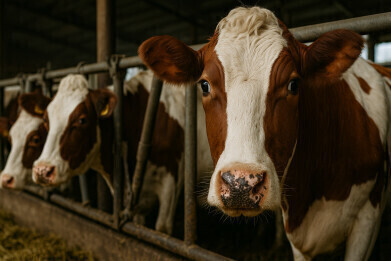
Although around half a dozen strains of the bacteria salmonella affect poultry, the lesser-known variant Salmonella Dublin poses a persistent and serious threat to cattle and public health. This multidrug-resistant strain, adapted to infect cattle, continued to cause disease across herds globally. Identified decades ago, the pathogen leads to pneumonia, septicaemia and in utero deaths of calves in cattle, and can be responsible for the deaths of thousands of animals each year.
In humans, Salmonella Dublin was far more dangerous than common strains of the bacterium. Though relatively rare, infections can be severe, particularly in children, older patients and those who are immunocompromised. In such cases, infection has frequently led to hospitalisation with a mortality rate of up to 12 per cent. Transmission occurs through direct contact with animals or via unpasteurised dairy products or undercooked meat.
In an effort to combat this infection, Denmark introduced a national eradication strategy in 2008. But despite this the country has not succeeded in eliminating the disease. Infection rates declined from up to a quarter of all Danish cattle herds in 2008 to just 5 per cent by 2025. However, prevalence had risen elsewhere around the world, with recent estimates suggesting infection rates of 18 per cent in the United States – notably in Wisconsin and California – and as high as 60 per cent in the United Kingdom.
“Salmonella Dublin is not just a threat [on the farm], it is a growing global public health risk as antibiotic resistance becomes more widespread. This is a bacterium that causes human fatalities every year, and urgent action is required,” said Professor Dagim Belay, Department of Food and Resource Economics, University of Copenhagen.
Professor Belay and Jakob Vesterlund Olsen, senior adviser at the same department, co-authored a study assessing the economic burden of Salmonella Dublin across Danish dairy farms over the course of a decade. Their findings revealed that the disease led to higher calf mortality, reduced milk yields and increased costs to the farm for medication and veterinary services.
“The insidious nature of Salmonella Dublin means it often goes unnoticed. Many infected herds show no outward symptoms, allowing the disease and associated economic losses to accumulate over time,” said Professor Belay.
According to the study, farms with high infection levels incurred average additional costs of approximately 11,300 Euros per year. Even herds with low-level infection faced extra annual costs of around 6,700 Euros, based on an average herd size of 200 dairy cows.
“These estimates are conservative, as they are based on data from Denmark’s control system. In countries without similar programmes, such as the UK or US, the financial impact is likely to be far greater,” he added.
To accelerate eradication, the authors called for stronger economic incentives. These could include subsidies for farms investing in preventative and early detection measures, or price penalties for milk from chronically infected herds.
Finally, the researchers urged authorities to provide better-targeted information to cattle producers, raising awareness of the hidden costs and promoting evidence-based control strategies.
For further reading please visit: 10.1111/agec.70016




Digital Edition
Lab Asia Dec 2025
December 2025
Chromatography Articles- Cutting-edge sample preparation tools help laboratories to stay ahead of the curveMass Spectrometry & Spectroscopy Articles- Unlocking the complexity of metabolomics: Pushi...
View all digital editions










Events
Jan 21 2026 Tokyo, Japan
Jan 28 2026 Tokyo, Japan
Jan 29 2026 New Delhi, India
Feb 07 2026 Boston, MA, USA
Asia Pharma Expo/Asia Lab Expo
Feb 12 2026 Dhaka, Bangladesh




