-
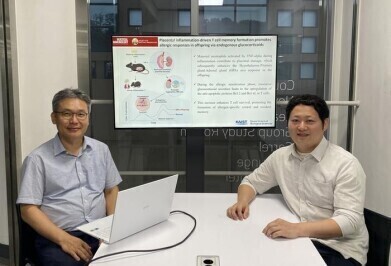 [From left] Professor Heung-kyu Lee from the Department of Biological Sciences, Dr.Myeong Seung Kwon from the Graduate School of Medical Science. Credit: KAIST.
Research news
KAIST study links inflammation of placenta during pregnancy to paediatric allergies
Aug 15 2025
Researchers at the Korea Advanced Institute of Science and Technology (KAIST) have identified inflammation of the placenta during pregnancy as a causal factor in the development of allergic conditions such as paediatric asthma. The study has provided the first direct evidence that maternal immune activation can modulate the foetal immune system via placental signalling pathways, priming the offspring for stronger allergic responses after birth.
KAIST, led by President Heung-kyu Lee, announced on 4 August that a team under Heung-kyu Lee in the Department of Biological Sciences had demonstrated this link through a series of experiments in a mouse model. The researchers induced systemic inflammation in pregnant mice using lipopolysaccharide (LPS), a well-known bacterial toxin that provokes a robust immune response. This inflammatory challenge resulted in damage to the placental tissue.
The team found that the inflamed placenta produced elevated levels of tumour necrosis factor-alpha (TNF‑α), a pro-inflammatory cytokine. This triggered the activation of neutrophils – the most abundant type of white blood cell in the body – which caused further inflammatory damage within the placenta. The neutrophil-driven inflammation, in turn, modulated the stress response axis of the developing fetus.
This disruption led to elevated secretion of glucocorticoid stress hormones in the offspring, which prolonged the survival of T cells and enhanced their memory differentiation. T cells are essential components of the adaptive immune system, and their altered development in utero led to exaggerated allergic responses after birth.
The researchers observed that these memory T cells, when exposed to environmental allergens such as house dust mite proteins, provoked a heightened eosinophilic response in the airways of the mice. This involved the recruitment of additional immune cells known to mediate allergic inflammation and asthma.
“This study is the first in the world to identify how a mother's inflammatory response during pregnancy affects the fetus’s allergic immune system through the placenta,” said Professor Heung-kyu Lee, principal investigator of the study. “This will be an important scientific basis for developing biomarkers for early prediction and establishing prevention strategies for paediatric allergic diseases,” he added.
The findings have opened a novel avenue for research into early-life immune programming and the prenatal origins of chronic allergic conditions.
For further reading please visit: 10.1016/j.mucimm.2025.06.006


Digital Edition
Lab Asia Dec 2025
December 2025
Chromatography Articles- Cutting-edge sample preparation tools help laboratories to stay ahead of the curveMass Spectrometry & Spectroscopy Articles- Unlocking the complexity of metabolomics: Pushi...
View all digital editions








Events
Jan 21 2026 Tokyo, Japan
Jan 28 2026 Tokyo, Japan
Jan 29 2026 New Delhi, India
Feb 07 2026 Boston, MA, USA
Asia Pharma Expo/Asia Lab Expo
Feb 12 2026 Dhaka, Bangladesh




