-
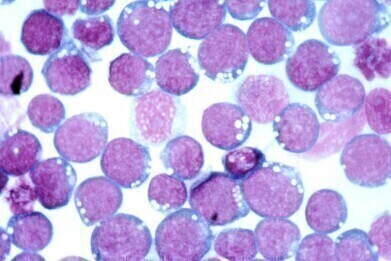 The Epstein-Barr virus, the infection pathogen behind so-called 'glandular fever'. Credit: GetArchive.net public domain publishing platform
Research news
Epstein-Barr virus more closely linked to progression of multiple sclerosis
Feb 21 2025
Epstein-Barr Virus (EBV) infection – the infection pathogen behind so-called 'glandular fever' – is a risk factor for multiple sclerosis (MS), but the exact mechanisms involved have been unclear. Now, Joona Sarkkinen and colleagues reveal how EBV-driven changes to B cells in the deep cervical lymph nodes (dcLNs) of patients with MS may contribute to disease progression.
These findings provide valuable insights into MS development in humans, which may be difficult to capture in animal models of disease. MS is characterized by B cell-mediated autoimmunity. Prior research has shown that the dcLNs are the site of anti-EBV adaptive immune responses, and that they are enlarged in patients with MS, compared to healthy individuals.
However, it has been unclear how EBV might drive changes to the dcLN immune landscape. To investigate, Sarkkinen et al. examined dcLN biopsies from 6 newly diagnosed patients with MS and 3 healthy controls. They found reduced numbers of B cells and follicular helper T (TFH) cells in the germinal centre (GC), and an expanded subset of memory B cells in patients with MS.
The memory B cells, along with some GC B cells, had transcriptional signatures that matched those seen in EBV-infected B cells. Using T cell receptor sequencing, the researchers observed an enrichment of EBV-targeting cytotoxic T cells in some patients with MS and noted that the T cells showed altered profiles and signs of immune exhaustion.
Several patients with MS had elevated levels of EBV DNA in the dcLNs, as well as increased EBV and herpes viruses in the saliva, when compared to healthy controls. The authors suggest that the increased viral loads in patients with MS may be due to EBV reactivation.
“These findings suggest that EBV-driven B cell dysregulation is a critical mechanism in MS pathogenesis,” wrote Sarkinnen et al.
For further reading please visit:
https://doi.org/10.1126/science.abj8222
Article authors:
- Joona Sarkkinen (Helsingin yliopisto)
- Dawit A. Yohannes (Helsingin yliopisto)
- Pia Dürnsteiner (Helsingin yliopisto)
- Alexandra Elsakova (Helsingin yliopisto, University of Helsinki)
- Jani Huuhtanen (Helsingin yliopisto, University of Helsinki and Helsinki University Hospital Comprehensive Cancer Center, Aalto University School of Science)
- Nea Kreivi (Helsingin yliopisto)
- Kirsten Nowlan (Helsingin yliopisto)
- Riikka Lindén (Helsingin yliopisto, HUS-yhtyma)
- Goran Kurdo (HUS-yhtyma)
- Pentti Tienari (Helsingin yliopisto, HUS-yhtyma)
- Mika Saarela (HUS-yhtyma, University of Helsinki)
- Eliisa Kekäläinen (Helsingin yliopisto)
- Sini Laakso (Helsingin yliopisto, HUS-yhtyma)
- Maria Perdomo (University of Helsinki and Helsinki University Hospital Comprehensive Cancer Center, HUS-yhtyma, University of Helsinki)




Digital Edition
Lab Asia Dec 2025
December 2025
Chromatography Articles- Cutting-edge sample preparation tools help laboratories to stay ahead of the curveMass Spectrometry & Spectroscopy Articles- Unlocking the complexity of metabolomics: Pushi...
View all digital editions










Events
Jan 21 2026 Tokyo, Japan
Jan 28 2026 Tokyo, Japan
Jan 29 2026 New Delhi, India
Feb 07 2026 Boston, MA, USA
Asia Pharma Expo/Asia Lab Expo
Feb 12 2026 Dhaka, Bangladesh




