-
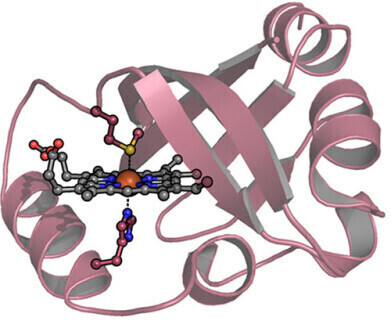 The natural protein RcoM. Credit: University of Maryland School of Medicine
Research news
Protein therapy shows potential as first antidote for carbon monoxide poisoning cases
Aug 28 2025
A research team led by the University of Maryland School of Medicine (UMB), Baltimore, United States, has engineered a protein-based molecule which shows promise as an antidote to carbon monoxide (CO) poisoning, with fewer side effects than current experimental options.
CO poisoning causes more than 50,000 emergency department visits in the United States annually and results in about 1,500 deaths. Worldwide this figure is thought to be around one million cases of poisoning with around 40,000 deaths.
Exposure occurs when the gas accumulates in enclosed spaces due to only partial combustion of a fossil fuel, such as from faulty natural gas appliances, indoor use of petrol-powered generators, or vehicle exhaust in closed garages. Inhalation during fires is also a common cause.
Existing treatments rely on oxygen-based therapies, which accelerate the elimination of CO but do not prevent long-term cardiac or neurological damage in nearly half of survivors.
Hypoxic injury and inflammatory processes in the brain can bring about cognitive impairment, motor disturbances with Parkinsonism-like symptoms, behavioural changes and potentially speech and language problems, sleep disorders or even hearing loss.
Cardiac complications include myocardial scarring, chronic heart failure, arrhythmias , reduced tolerance for exercise with increased risk of premature death from cardiac causes.
The engineered therapy – RcoM-HBD-CCC – is based on the regulator of metabolism (RcoM) protein from the bacterium Paraburkholderia xenovorans, which detects trace carbon monoxide. The protein has been modified to selectively bind with CO without interfering with oxygen transport. In mouse model studies, it rapidly removed the CO from red blood cells and to be safely in urine.
“Unlike other protein-based treatments, we found [that this] compound caused only minimal changes in blood pressure which was an exciting finding and raised the potential for this molecule to have clinical applications,” said Dr. Mark T. Gladwin, Dean of the UMB School of Medicine and Vice President for Medical Affairs at the UMB.
“This has the potential to become a rapid, intravenous antidote for CO that could be given in the [hospital] emergency department or even in the field by first responders,” he said.
CO binds to haemoglobin with a 200 to 400-times greater affinity than oxygen, impairing oxygen delivery to body tissues. RcoM-HBD-CCC acts as a ‘scavenger’ haemoprotein, binding CO in the bloodstream and reducing the dissolved gas’ clearance time to under a minute. This compares to more than an hour for oxygen therapy and five hours without treatment intervention.
“This molecule could be a game-changer because it can directly and rapidly remove CO from the body with such a low risk of off-target side effects.
“Given the promising results, we also see the potential for RcoM-HBD-CCC use in other areas, like as a blood substitute in severe anaemia or haemorrhagic shock,” said Dr. Jason J. Rose, Associate Professor of Medicine and Division Chief of Pulmonary, Critical Care and Sleep Medicine at UMB.
Further pre-clinical studies will be required to establish safe dosage ranges. The therapy could also be explored for other applications, such as oxygen delivery in acute respiratory distress syndrome, organ preservation for transplantation and the treatment of severe anaemia.
Gladwin and Rose are co-founders of Globin Solutions, which has licensed RcoM-based technology from the University of Pittsburgh for the development of a CO antidote. The company also has research agreements with UMB.
For further reading please visit: 10.1073/pnas.2501389122

Digital Edition
Lab Asia Dec 2025
December 2025
Chromatography Articles- Cutting-edge sample preparation tools help laboratories to stay ahead of the curveMass Spectrometry & Spectroscopy Articles- Unlocking the complexity of metabolomics: Pushi...
View all digital editions








Events
Jan 21 2026 Tokyo, Japan
Jan 28 2026 Tokyo, Japan
Jan 29 2026 New Delhi, India
Feb 07 2026 Boston, MA, USA
Asia Pharma Expo/Asia Lab Expo
Feb 12 2026 Dhaka, Bangladesh




