-
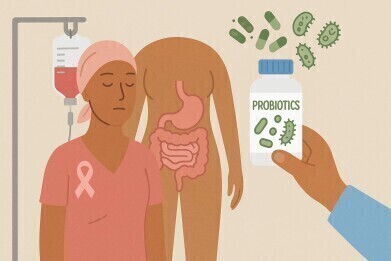 An AI-generated representation of the concept of probiotics in the alleviation of breast cancer treatment symptoms. Credit: A.Booth via Chat GPT
Research news
Supplementation by probiotics may help reduce side effects of chemotherapy in breast cancer
Jun 12 2025
Breast cancer remains the most common cancer among women worldwide, accounting for 11.5% of new cancer cases and 6.8% of cancer-related deaths in 2022, according to the Global Cancer Observatory. The high global burden of the disease continues to place considerable pressure on healthcare systems while compromising quality of life for patients.
Chemotherapy remains a cornerstone of breast cancer treatment. Despite its effectiveness in targeting malignant cells, the therapy is associated with a range of adverse effects due to its impact on healthy tissues, including the bone marrow, gastrointestinal tract, reproductive system, oral cavity and hair follicles. Common side effects include fatigue, anaemia, nausea, immunosuppression, bleeding and gastrointestinal discomfort. In some cases, these complications are so severe that patients discontinue treatment, leading to poorer clinical outcomes.
To alleviate these symptoms, clinicians often employ symptom-specific treatments such as antiemetics for nausea. However, such approaches may not fully address the overall treatment burden. This has prompted interest in complementary interventions, including probiotic supplementation, as potential strategies to reduce chemotherapy-related side effects.
Probiotics are defined as live microorganisms that provide health benefits when consumed in sufficient quantities. They are increasingly being studied for their potential role in supporting immune function and improving metabolic responses during cancer treatment. Certain probiotic strains, such as lactic acid bacteria, have demonstrated antiproliferative effects on breast cancer cells in vitro, notably by suppressing the expression of cancer-testis antigen genes.
Previous studies have focused primarily on the use of probiotics to mitigate symptoms such as oral mucositis and diarrhoea, with most research conducted in patients with colorectal or head and neck cancers. Research specific to breast cancer patients, particularly in low- and middle-income settings such as Indonesia, remains limited.
In response to this evidence gap, a recent study by an Indonesian team at the University of Surabaya evaluated the effectiveness of a seven-strain probiotic supplement in patients with breast cancer receiving chemotherapy. Researchers used Karnofsky performance scores, complete blood counts and blood biochemistry analyses to assess the supplement’s impact.
The study found that multi-strain probiotics may alleviate chemotherapy-related symptoms, particularly fatigue and nausea. Improvements were observed both before and after supplementation. Additionally, the researchers reported a potential benefit to metabolic function, as indicated by changes in blood urea nitrogen levels. Patients also exhibited enhanced functional capacity, with significant gains in their ability to carry out daily activities. This was likely related to the reduction in fatigue and gastrointestinal discomfort.
Despite these encouraging results, the authors emphasised the need for larger, multi-centre studies to validate the findings and to determine optimal probiotic strains and dosages for routine clinical use. Nonetheless, the study adds to the growing body of evidence supporting the role of probiotics as a potentially valuable adjunct in cancer care.
As the demand for more holistic and patient-centred treatment approaches continues to rise, probiotics may offer a low-risk, accessible option to support quality of life and treatment adherence among patients undergoing chemotherapy for breast cancer.
For further reading please visit: 10.3897/pharmacia.72.e144998


Digital Edition
Lab Asia Dec 2025
December 2025
Chromatography Articles- Cutting-edge sample preparation tools help laboratories to stay ahead of the curveMass Spectrometry & Spectroscopy Articles- Unlocking the complexity of metabolomics: Pushi...
View all digital editions









Events
Jan 21 2026 Tokyo, Japan
Jan 28 2026 Tokyo, Japan
Jan 29 2026 New Delhi, India
Feb 07 2026 Boston, MA, USA
Asia Pharma Expo/Asia Lab Expo
Feb 12 2026 Dhaka, Bangladesh




