Research news
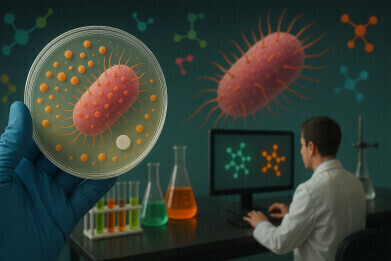
AI-designed drug shows antibiotic promise against drug-resistant gonorrhoea, MRSA
Aug 26 2025
Researchers at the Massachusetts Institute of Technology (MIT) have developed antibiotic candidates using generative artificial intelligence (AI) to target two highly resistant bacterial pathogens – Neisseria gonorrhoeae and methicillin-resistant Staphylococcus aureus (MRSA).
By applying two distinct generative AI methods, the team created more than 36 million hypothetical compounds and computationally assessed them for antimicrobial properties. The most promising candidates, which are structurally unlike existing antibiotics, appear to work through novel mechanisms that disrupt bacterial cell membranes. The researchers have stated that this strategy could also be applied to identify drug leads against other bacteria.
“We’re excited about the possibilities that this project opens up for antibiotic development.
“Our work shows the power of AI from a drug design standpoint and enables us to exploit much larger chemical spaces that were previously inaccessible,” said Dr. James Collins, the Termeer Professor of Medical Engineering and Science in MIT’s Institute for Medical Engineering and Science and Department of Biological Engineering.
The study was led by researchers Dr. Aarti Krishnan, Dr. Melis Anahtar and Dr. Jacqueline Valeri. It builds on the Antibiotics-AI Project’s earlier success in discovering compounds such as halicin and abaucin. The project has previously relied on screening large libraries of existing chemicals; the current work expands the search to molecules not found in any known database.
For N. gonorrhoeae, the team used a fragment-based approach, identifying a promising chemical fragment – F1 – before applying two generative AI algorithms:
- chemically reasonable mutations (CReM)
- fragment-based variational autoencoder (F-VAE)
to design millions of related molecules. Computational screening reduced this to 1,000 candidates, only 80 of which were suitable for synthesis. One compound, NG1, proved highly effective in both laboratory tests and a mouse model, acting by inhibiting LptA, a protein involved in bacterial membrane synthesis.
A second, unconstrained design approach targeted S. aureus. Using CReM and F-VAE without fixed chemical fragments, the researchers generated 29 million compounds, filtered these for viability, and synthesised 22 candidates. Six displayed strong antibacterial activity in vitro, and the leading compound, DN1, eliminated MRSA in the skin infection of a mouse model.
Phare Bio, a non-profit partner in the Antibiotics-AI Project, is now working to optimise NG1 and DN1 for preclinical development. Collins said the collaboration aims to refine analogues and adapt the approach to other high-priority pathogens, including Mycobacterium tuberculosis and Pseudomonas aeruginosa.
For further reading please visit: 10.1016/j.cell.2025.07.033


Digital Edition
Lab Asia Dec 2025
December 2025
Chromatography Articles- Cutting-edge sample preparation tools help laboratories to stay ahead of the curveMass Spectrometry & Spectroscopy Articles- Unlocking the complexity of metabolomics: Pushi...
View all digital editions








Events
Jan 21 2026 Tokyo, Japan
Jan 28 2026 Tokyo, Japan
Jan 29 2026 New Delhi, India
Feb 07 2026 Boston, MA, USA
Asia Pharma Expo/Asia Lab Expo
Feb 12 2026 Dhaka, Bangladesh




