Laboratory products
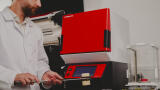
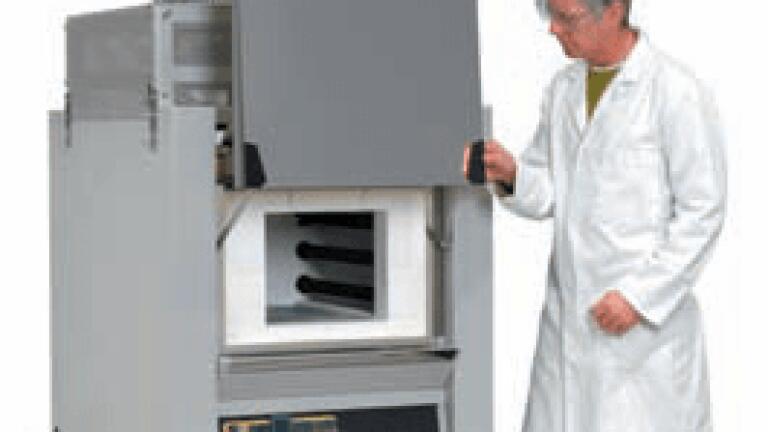
The Fraunhofer Institute for Ceramic Technologies and Systems IKTS in Dresden is using a Carbolite furnace to research debinding and sintering of ceramics as part of in-depth investigations into the application benefits of foamed ceramics.
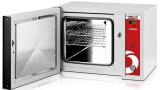
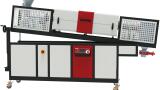
The research at Fraunhofer IKTS called for a custombuilt 35 litre capacity 1400°C furnace with silicon carbide heating. Additionally, Fraunhofer IKTS required the furnace to provide improved management of the toxic cyanide, isocyanate and nitrogen dioxide fumes that were produced from their previous, conventional furnace, as the polyurethane foam matrix and organic binders were burned-off. Carbolite achieved this goal by mounting a secondary catalytic after-burner on top of the primary chamber furnace.
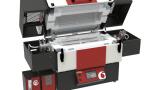
The after-burner was derived from a modified variant of a Carbolite ‘G-range’ tube furnace incorporating a central core comprising a catalytic labyrinth to ensure the toxic fumes were fully combusted. Samples containing up to 150g of polyurethane can now be tested with the processed fumes from the Carbolite furnace now being fed into the Fraunhofer's extractor system, which operates at 150 to 250 litres/minute.
The overall solution is designed and constructed to automatically run through variations on a two-step temperature cycle. For debinding purposes the furnace has to run at 600°C but the furnace also needs to run at 1290°C for sintering of the ceramic foam once the binder has burned off. To protect the afterburner, Carbolite also fitted an automatic damper system which is designed to close automatically when the main furnace temperature rises beyond 600°C.
The Carbolite solution is specially constructed to ensure that the exhaust fumes are introduced to the catalyst at the optimum ffective temperature for catalytic performance without damaging the catalyst. To achieve optimal catalytic conditions the furnace system is equipped with a sophisticated control system. The main furnace chamber and the sample being studied are protected by a variable temperature and over-temperature protection thermostat in
addition to the main programmable controller.
Additional control equipment includes an afterburner controller pre-set at 550°C plus a flip-flop over temperature device set at 750°C in order to protect the afterburner.



.jpg)
-(2).jpg)