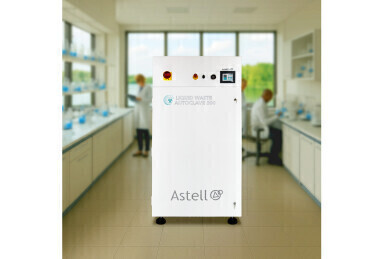
Autoclaves
Revolutionising Lab Safety and Sustainability: AstellBio’s Liquid Waste Autoclaves
Jun 18 2025
In laboratories across the globe, the disposal of biohazardous liquid waste has long been a persistent challenge. From chemical risks to manual handling hazards, traditional methods of sterilising contaminated liquids often fall short of the highest safety and environmental standards. AstellBio, a division of the long-established sterilisation experts Astell Scientific, is changing that narrative with its advanced Liquid Waste Autoclaves.
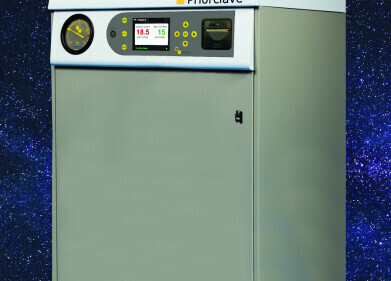
These cutting-edge systems are designed to automate the sterilisation of liquid waste at containment levels 2 and 3, providing a reliable, sustainable, and user-safe alternative to conventional methods. The core technology utilises steam-based thermal sterilisation, ensuring complete deactivation of biological hazards without the use of harmful chemicals.
A Safer Alternative to Chemical and Manual Systems
Conventional approaches to managing infectious liquid waste typically involve either chemical disinfection or manual autoclaving. However, both have serious drawbacks. Chemical disinfection introduces toxic substances that can pose risks to operators and corrode plumbing, while manual handling of autoclave vessels can be dangerous and labour-intensive.
AstellBio’s system eliminates both hazards by fully automating the process. Liquid waste is fed directly from the source—such as sinks, drains, bioreactors, or hydroponic systems—into a sealed sterilisation chamber. There’s no need for manual transfer, which greatly reduces the risk of exposure, scalds, and spills.
How It Works
At the heart of the Liquid Waste Autoclave is a pressurised chamber that heats waste to a minimum of 121°C, effectively sterilising it before safe discharge into standard drainage systems. The process is backed by integrated monitoring systems, which track temperature and pressure throughout the cycle. The units also support biological validation, offering peace of mind in high-containment environments.
Unlike UV systems, which can fail when waste is opaque or contains solids, AstellBio’s thermal sterilisation is unaffected by such variables. This makes it a dependable choice for a broad range of lab applications, including pharmaceutical, academic, and veterinary facilities.
Designed for Flexibility and Efficiency
The autoclaves are modular and compact, allowing seamless integration into new or existing lab infrastructure. They can connect to a wide variety of waste sources, from laboratory sinks and effluent tanks to aquatics systems and bioreactors. This versatility is ideal for high-throughput research centres or facilities dealing with genetically modified organisms (GMOs) and infectious agents.
Some models, such as the Liquid Waste Autoclave 200, can handle up to 200 litres per hour, all within a small footprint—making them a practical solution even in space-limited environments.
Sustainable and Compliant
Sustainability is a key advantage of AstellBio’s approach. The system relies solely on electricity and water—no chemicals are needed, and there’s no risk of polluting downstream ecosystems. It also supports clean energy integration for labs aiming to reduce their environmental impact.
By automating a traditionally hazardous process and removing the need for chemicals, AstellBio is helping labs not only meet but exceed regulatory standards while protecting personnel and the planet.
For labs seeking a safer, smarter, and more sustainable solution for liquid waste disposal, AstellBio’s Liquid Waste Autoclaves represent a new gold standard.
Learn more about Liquid Waste Autoclaves here.
Digital Edition
Lab Asia Dec 2025
December 2025
Chromatography Articles- Cutting-edge sample preparation tools help laboratories to stay ahead of the curveMass Spectrometry & Spectroscopy Articles- Unlocking the complexity of metabolomics: Pushi...
View all digital editions









Events
Jan 21 2026 Tokyo, Japan
Jan 28 2026 Tokyo, Japan
Jan 29 2026 New Delhi, India
Feb 07 2026 Boston, MA, USA
Asia Pharma Expo/Asia Lab Expo
Feb 12 2026 Dhaka, Bangladesh




