Autoclaves
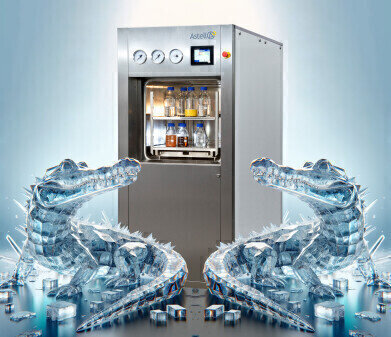
Cold Snap – Top 5 Cooling Functions to Enhance Autoclave Processing Times
Apr 15 2025
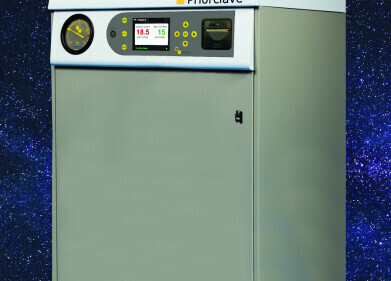
Thermal sterilization destroys microbes and biological materials by heating them to temperatures above 121°C. However, this is only half of the story when processing items in an autoclave. After sterilization, but before items can be removed from the autoclave, it is essential for the temperature to drop. Here, we look at five key features that enhance autoclave cooling.
1. Cooling Fan
The humble cooling fan blows air across the surface of the autoclave chamber vessel, stripping heat from the external surface and, in turn, removing it from within the autoclave chamber. This budget-friendly method provides faster cooling than passive heat dissipation but relies on the chamber’s external surface being exposed to the atmosphere. As such, it is not compatible with features that wrap around the chamber vessel—such as insulation materials or chamber jackets.
2. Ecofill
Some autoclaves generate sterilizing steam by heating water within the chamber vessel. After sterilization, this water cools slowly due to its high heat capacity. Since cooling the autoclave chamber requires cooling everything inside it, an effective way to accelerate cooling is to remove the heated water. The Ecofill system transfers this water to an external reservoir after sterilization, eliminating it from the cooling equation. This method not only speeds up cooling but also allows the heat energy to be reused in future sterilization cycles.
3. Vacuum Cooling
Due to the intrinsic relationship between temperature and pressure, vacuum pumps can be excellent tools for autoclave cooling. By reducing the pressure within the autoclave chamber after sterilization, the boiling point of moisture inside the chamber is lowered. This causes the moisture to evaporate, and the phase change effectively removes heat from the autoclave. Additionally, this process helps dry items inside the autoclave, which is particularly beneficial for sterilizing fabric-wrapped or porous materials.
4. Water Cooling Jacket
Encapsulating the autoclave chamber vessel within another vessel—or jacket—allows a flow of water to pass over its external surfaces. Like the cooling fan method, this strips heat from the chamber vessel's outer surface, but unlike the fan, the chamber vessel does not need to be directly exposed to air. This allows the water-cooling jacket to be enclosed within a layer of insulation, minimizing heat loss during sterilization and making the autoclave more energy-efficient.
Once water passes through the jacket and absorbs heat from the vessel, it can be drained away, effectively removing heat from the system. A more efficient approach is to recycle the coolant water by allowing it to cool in an unpressurized vessel before recirculating it. Cooling can be further enhanced by adding fresh cool water to the system.
5. Internal Chamber Fan
For the pinnacle of autoclave cooling, we return to the fan—this time installed inside the autoclave chamber. The internal chamber fan generates airflow that accelerates heat dissipation from all items inside the chamber. One key advantage of this method is its compatibility with other cooling systems, such as the cooling jacket and vacuum cooling.
When combined with additional cooling hardware, autoclaves equipped with internal chamber fans can achieve cooling speeds up to 70% faster than those without dedicated cooling equipment. These improvements can effectively double an autoclave’s throughput, which can make the difference between requiring one or two autoclaves in high-demand environments.
From the simple, low-cost solution of a cooling fan to the advanced setup of a cooling jacket and internal chamber fan, there is a wide array of autoclave cooling solutions that can be built into an autoclave. Astell has over 140 years of autoclave manufacturing expertise and is happy to help you find the right autoclave with the correct cooling options for your laboratory requirements.
Digital Edition
Lab Asia Dec 2025
December 2025
Chromatography Articles- Cutting-edge sample preparation tools help laboratories to stay ahead of the curveMass Spectrometry & Spectroscopy Articles- Unlocking the complexity of metabolomics: Pushi...
View all digital editions





Events
Jan 21 2026 Tokyo, Japan
Jan 28 2026 Tokyo, Japan
Jan 29 2026 New Delhi, India
Feb 07 2026 Boston, MA, USA
Asia Pharma Expo/Asia Lab Expo
Feb 12 2026 Dhaka, Bangladesh