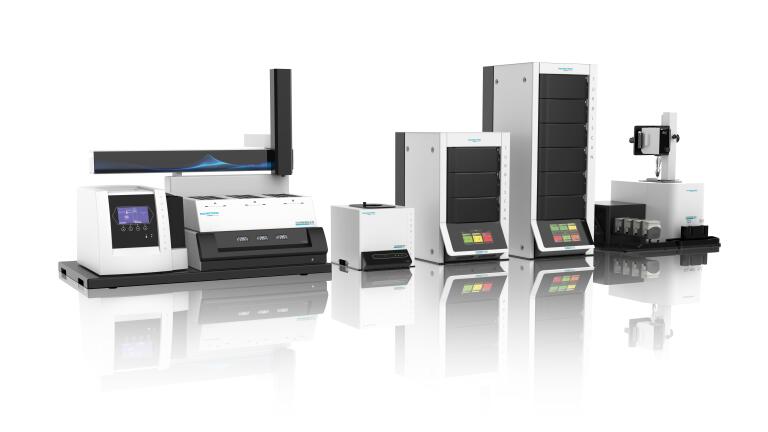
• Ensuring physical stability in pharmaceuticals: How TURBISCAN is transforming formulation science

Sample preparation

Ensuring physical stability in pharmaceuticals: How TURBISCAN is transforming formulation science

In the pharmaceutical industry, physical stability is more than a technical specification - it is a vital requirement for product safety, efficacy, and regulatory compliance. From vaccines and inhalers to injectable emulsions and oral suspensions, the performance of a drug is directly linked to the integrity of its formulation over time. Instability can lead to dosage inconsistencies, reduced bioavailability, and, ultimately, compromised patient outcomes.

Formulators face a complex challenge: pharmaceutical dispersions - whether suspensions, emulsions, or colloidal systems - are inherently thermodynamically unstable. Left unchecked, they naturally evolve toward separation, sedimentation, particle aggregation, or creaming. The goal is not to stop this evolution entirely (impossible), but to control it, slow it, and ensure stability within the intended shelf-life and usage window. This is precisely where TURBISCAN technology offers a game-changing advantage.

The challenge of physical instability

Pharmaceutical liquid dispersions can contain particles ranging from nanometres to millimetres, at concentrations from trace amounts to dense suspensions. They are used in a vast array of products: vaccines, respiratory therapies, parenteral nutrition, skin treatments, protein solutions, amorphous solid dispersions, and lipid-based drug delivery systems. Each of these applications is sensitive to even microscopic changes in particle size distribution or concentration.

When physical instability occurs - migration, aggregation, agglomeration, or coalescence - the consequences are significant:

  • Dosage variation: Sedimentation or creaming can lead to too much or too little active ingredient per dose
  • Lower efficiency: Particle aggregation reduces the active surface area, affecting dissolution and absorption rates
  • Immunogenicity risks: In vaccines or biologicals, instability can affect the ability to trigger an immune response
  • Patient safety concerns: In critical formulations like Total Parenteral Nutrition (TPN), instability can render the product unsuitable

Visual inspections and traditional analytical methods often miss early-stage changes, detecting issues only when they become pronounced - at which point reformulation is costly and time-consuming.

TURBISCAN: Early detection and quantification

TURBISCAN uses Static Multiple Light Scattering (SMLS) to detect physical changes in a formulation at both the microscopic and macroscopic levels - up to 1,000 times faster than visual observation. By scanning samples at rest, without dilution, it can detect and quantify particle size variations and concentration changes in real time, on a wide range of particle sizes (from 10 nm to 1mm) and concentrations (down to 10-4 up to 95% v/v).

This non-invasive approach respects the integrity of the formulation, enabling accurate stability measurements from the actual product. TURBISCAN works equally well with transparent, translucent, and opaque samples, using transmission and backscattering signals to build a complete picture of destabilisation processes.

Key capabilities include:

  • Quantifying all forms of destabilisation: sedimentation, creaming, flocculation, coalescence, particle size evolution
  • Significant time savings: detect and measure instability up to 1,000 times faster than visual inspection, reducing test durations from days or weeks to hours
  • True objectivity: obtain precise, instrument-based data rather than subjective visual assessments
  • Real stability measurement: testing native samples without dilution or disturbance, ensuring results reflect actual formulation behaviour
  • TSI index: a unique one-click number to rank and compare stability across batches or formulations, accounting for all destabilisation phenomena – ideal for data-driven research

Applications in pharma: From R&D to Quality Control

TURBISCAN is used globally across pharmaceutical research and production lines to accelerate formulation development, ensure quality control, and support regulatory submissions.

Some example applications include:

  • Adjuvant selection for vaccines: Quickly detecting sedimentation rates in candidate formulations to choose the most stable option
  • Redispersion studies: Measuring how easily settled particles can be restored to their original state, crucial for vaccine bioavailability and injectables
  • Total Parenteral Nutrition stability: Early detection of creaming and size variation when antibiotics are added, preventing unsafe patient outcomes
  • Pressurised inhalers (pMDI): Measuring rapid destabilisation in vials, linking physical changes to dosage delivery over time
  • Amorphous Solid Dispersions (ASD): Screening polymers to prevent coalescence and recrystallisation, improving solubility
  • Lipid Nanocarrier and LNCP screening: Selecting optimal carrier structures and formulations for mRNA, protein, and hydrophobic APIs
  • Pickering emulsions: Studying surfactant-free droplet stability for antifungal topical delivery
  • High-concentration therapeutic proteins: Measuring particle sizes without dilution, tracking denaturation kinetics under various stabilisers

Advantages for formulators

TURBISCAN delivers three critical benefits for pharmaceutical scientists and manufacturers:

  1. Speed – Detecting instability in hours instead of days or weeks accelerates R&D timelines and reduces time-to-market
  2. Accuracy – Testing native formulations without dilution ensures measured stability matches real-world performance
  3. Versatility – Suitable for suspensions, emulsions, foams, nanoparticles, and biological formulations across all phases - from early research to final batch release

By identifying and quantifying destabilisation early, formulators can adjust composition, particle size, or processing conditions before products reach patients. This capability not only improves safety and efficacy but also reduces formulation risk and manufacturing waste.

Who benefits most?

TURBISCAN is a must-have for:

  • Pharmaceutical R&D Teams working on advanced drug delivery systems, including injectables, parenterals, and vaccines
  • Formulation and Process Engineers eager to reduce surfactant and excipient screening time
  • Quality and Stability Analysts seeking faster, more predictive tools for product shelf-life assessment

The technology’s versatility spans a wide range of applications: suspensions, emulsions, lipid-based carriers, and inhalation products. Wherever particle stability is critical, TURBISCAN delivers clarity and confidence.

More information online



Digital Edition

Lab Asia Dec 2025

December 2025

Chromatography Articles- Cutting-edge sample preparation tools help laboratories to stay ahead of the curveMass Spectrometry & Spectroscopy Articles- Unlocking the complexity of metabolomics: Pushi...

View all digital editions

Events

Smart Factory Expo 2026

Jan 21 2026 Tokyo, Japan

Nano Tech 2026

Jan 28 2026 Tokyo, Japan

Medical Fair India 2026

Jan 29 2026 New Delhi, India

SLAS 2026

Feb 07 2026 Boston, MA, USA

Asia Pharma Expo/Asia Lab Expo

Feb 12 2026 Dhaka, Bangladesh

View all events