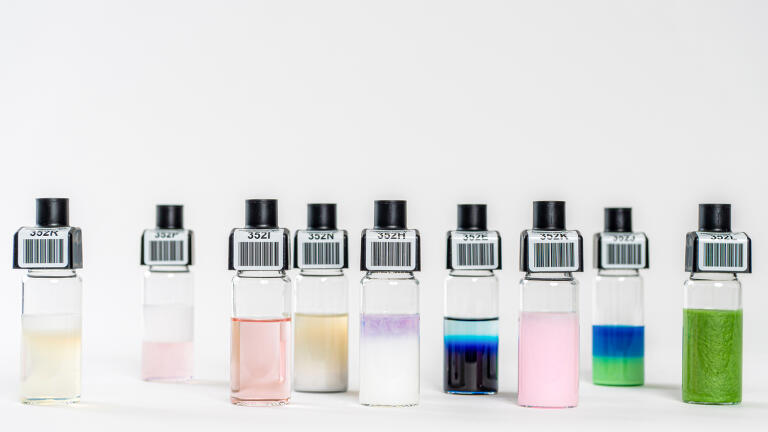
Laboratory products
Ensuring that products maintain their performance, quality, and safety is fundamental for manufacturers across many industries. Predicting shelf-life accurately - especially during the early stages of product development - remains a complex challenge, often requiring accelerated stability testing and advanced analytical methods.
The international standard ISO/TR 13097 offers practical guidance on dispersion stability testing. It defines shelf-life as the recommended storage period during which a product’s properties remain within acceptable, specified limits under expected conditions of distribution, storage, and use. For dispersions and similar products, stability means their key attributes do not deviate outside these acceptable ranges over time.
Historically, shelf-life has been determined through simple bottle tests and visual inspections. While easy to implement, these approaches are slow and subjective, frequently leading to delays and inconsistent results during product development.
To meet the need for faster, more objective results, ISO/TR 13097 recommends instrumental, traceable methods over traditional visual checks. Instrumental testing can detect the onset of destabilization much earlier and with greater sensitivity and reproducibility, providing a clearer, operator-independent assessment. Testing should be performed on native, undiluted samples to preserve their original characteristics.
Accelerated stability assessment typically involves three approaches:
Thermal acceleration: Exposing samples to elevated temperatures or temperature cycling, which simulates conditions encountered during storage and transport.
Mechanical acceleration: Subjecting samples to centrifugation or vibration. However, this can introduce stresses that may not accurately reflect real-world conditions, particularly for complex products.
Physico-chemical perturbation: Altering sample composition by adding substances like solvents or acids to evaluate resistance to change.
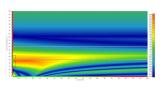
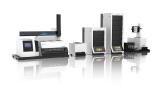
TURBISCAN, based on Static Multiple Light Scattering (SMLS), has become a leading technology for rapid, direct evaluation of dispersion stability. By scanning samples optically in their native state, TURBISCAN measures backscattering and transmission changes over time—parameters directly linked to destabilization phenomena such as coalescence, sedimentation, and phase separation. This technique is up to 1,000 times faster than visual observation and requires no sample preparation, making it highly efficient and operator-independent.
The TURBISCAN Stability Index (TSI) consolidates all detected destabilization events into a single, quantitative value: the higher the TSI, the less stable the product.
Shelf-life prediction can be approached in two main ways:
With its high sensitivity, non-invasive analysis, and compatibility with accelerated thermal testing, TURBISCAN offers a powerful solution for shelf-life prediction. It enables manufacturers to obtain rapid, objective stability assessments, streamline development timelines, and maintain compliance with ISO/TR 13097, setting a new standard for product stability testing.


.jpg)
-(2).jpg)