News
Scientists Discover Link to Treatment for Prostate Cancer
Aug 17 2015
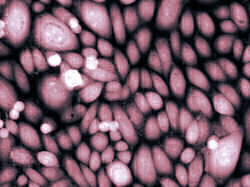
Researchers in The YCR Cancer Research Unit in the Department of Biology at York believe they have identified a direct link between how some tiny regulatory molecules in cells - known as micro-RNAs - can make prostate cancers resistant to radiotherapy. It is hoped that this new development could pave the way for more effective treatments - allowing a lower dose of radiotherapy to be used while prolonging the lives of thousands of men. The most commonly diagnosed form of male cancer in the UK, prostate cancer kills more than 11,000 men every year.
Every cell has hundreds of micro-RNAs now considered vital for the organisation of the various tissues in the body, instructing genes when and where to be active; the researchers found that some micro-RNAs acted in a positive manner, switching off genes which could make the stem cells susceptible to radiotherapy, whilst other micro-RNAs were not expressed in the resistant stem cells, permitting the expression of resistance genes.
By manipulating the levels of these critical micro-RNAs in the clinic, scientists say it should be possible to kill greater numbers of cancer stem cells than ever before, reducing the 30% of prostate cancer patients whose tumours recur after radiotherapy.
Professor Norman Maitland, of The YCR Cancer Research Unit, said of the estimated 42,000 men who are diagnosed with prostate cancer every year in the UK, about a third will get radiotherapy, and of those, about a third will fail on radiotherapy. “Doctors don’t know which patients are going to relapse - and the reason they relapse is probably because the radiotherapy is not focussed on the stem cell, it is focused on the whole tumour.
“We think that by exploiting this new knowledge we can make radiotherapy more effective. What is the impact? We believe it could extend the lifetime of these men. It could also allow a lower dose of radiotherapy to be used and that’s really what we are testing at the moment. Now we have a handle on why stem cells cause men to relapse after radiotherapy, this will be the bridge to transforming that into a treatment and making radiotherapy better.”
The research used tissues from prostate cancer patients, generously donated for this purpose via a Hull-York Medical School cooperation with Mr Matt Simms at Castle Hill Hospital in Hull.
The analysis was carried out by Dr Jayant Rane, as part of an EU-funded international consortium (PRONEST), in collaboration with Professor Tapio Visakorpi (University of Tampere, Finland), and Finnish bioinformaticians Antti Ylipaa and Professor Matti Nykter.
Studies published in European Urology and the British Journal of Cancer


Digital Edition
Lab Asia Dec 2025
December 2025
Chromatography Articles- Cutting-edge sample preparation tools help laboratories to stay ahead of the curveMass Spectrometry & Spectroscopy Articles- Unlocking the complexity of metabolomics: Pushi...
View all digital editions









Events
Jan 21 2026 Tokyo, Japan
Jan 28 2026 Tokyo, Japan
Jan 29 2026 New Delhi, India
Feb 07 2026 Boston, MA, USA
Asia Pharma Expo/Asia Lab Expo
Feb 12 2026 Dhaka, Bangladesh




