-
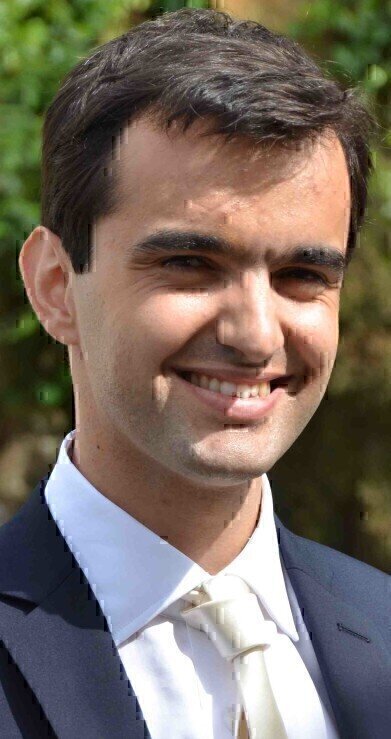 Dr Aires Ferreira
News
Researchers Predict Behaviour of Charge Currents in Graphene
Jan 20 2016
A new method that can realistically predict the behaviour of electric currents as they pass through materials has been devised by a physicist at the University of York. Until now scientists believed that in two-dimensional materials electrons always “localised” - in other words suddenly stopped as they scatter from impurities in the crystal structure.
Now research, led by Dr Aires Ferreira from the University’s Department of Physics, has shown that in a certain type of graphene “electron localisation” can be overcome. He said: “It is a game changer and has implications beyond physics. This new method could be beneficial in designing new materials, tailoring them for applications in ‘greener’ computing devices".
“Since it can be applied to study the electrical response of real-size crystal structures, it can help scientists tailor materials for faster and more efficient processing of information in the future. Although we don’t know what materials will be used in next-generation devices we now have a method capable of simulating what will happen to electric signals in complex materials. If we can predict how currents propagate we can build better circuitry and faster processors; it could revolutionise computers.”
The research, funded by the Royal Society, involved collaboration with Professor Eduardo Mucciolo from the University of Central Florida and has been published in Physical Review Letters.



Digital Edition
Lab Asia Dec 2025
December 2025
Chromatography Articles- Cutting-edge sample preparation tools help laboratories to stay ahead of the curveMass Spectrometry & Spectroscopy Articles- Unlocking the complexity of metabolomics: Pushi...
View all digital editions









Events
Jan 21 2026 Tokyo, Japan
Jan 28 2026 Tokyo, Japan
Jan 29 2026 New Delhi, India
Feb 07 2026 Boston, MA, USA
Asia Pharma Expo/Asia Lab Expo
Feb 12 2026 Dhaka, Bangladesh




