News
CNAP’s Anti-Malarial Plant given Chinese Approval
May 20 2015
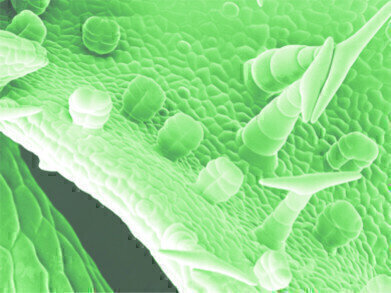
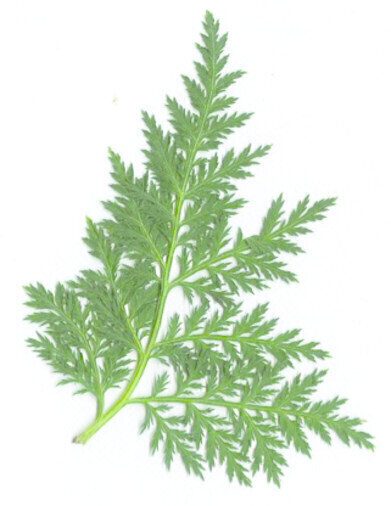
A new hybrid plant used in anti-malarial drug production, developed by scientists at the University of York’s Centre for Novel Agricultural Products (CNAP), is now registered as a new variety in China.
Developed through CNAP’s Artemisia Research Project, the plant is believed to be the first instance of Chinese registration for an Artemisia annua variety bred outside China. Since China is the world’s largest grower of Artemisia, the plant can now contribute even more to the global production of the anti-malarial drug artemisinin.
Artemisia annua, also known as Sweet Wormwood, originates from Asia and has been used in China to treat fevers for more than 2000 years. CNAP’s project, funded by the Bill & Melinda Gates Foundation, used fast-track plant breeding to develop many new hybrids which then underwent rigorous field-trialling in Africa and Asia. A single robust F1 hybrid was selected for its excellent biomass features and ability to produce good concentrations of artemisinin in its leaves.
Professor Ian Graham, Head of the University of York’s Department of Biology, said: “The ability to sell and distribute seeds in China demonstrates the wide impact of York’s excellent research. I am pleased that we have reached this milestone which will enable us to work more closely with Chinese growers to deliver this vitally important anti-malarial medicine.”
Seed from the new variety is produced in partnership with East-West Seed, an international seed company that will market the new variety in China.




Digital Edition
Lab Asia Dec 2025
December 2025
Chromatography Articles- Cutting-edge sample preparation tools help laboratories to stay ahead of the curveMass Spectrometry & Spectroscopy Articles- Unlocking the complexity of metabolomics: Pushi...
View all digital editions









Events
Jan 21 2026 Tokyo, Japan
Jan 28 2026 Tokyo, Japan
Jan 29 2026 New Delhi, India
Feb 07 2026 Boston, MA, USA
Asia Pharma Expo/Asia Lab Expo
Feb 12 2026 Dhaka, Bangladesh




