
News
Graphene adds Step-Change to Clean Water Tech
Oct 03 2019
Removing salts from brackish water using graphene-based membranes is being conducted by researchers from the University of Manchester and Khalifa University of Science and Technology in Abu Dhabi, in a bid to tackle water scarcity.
Reverse osmosis, which requires large quantities of water to be forced through a membrane, is a popular method to remove high content of salts; however, bodies of brackish water, with lower salt content, require more efficient methods.
The team of researchers developed new ion-selective membranes incorporating graphene oxide, for use in electromembrane desalination processes such as electrodialysis and membrane capacitive deionisation, which drives ions in saltwater out using an electric field.
By incorporating nanomaterials like graphene, the polymers that are used in the systems are significantly improved due to the mechanical strength of the 2D material.
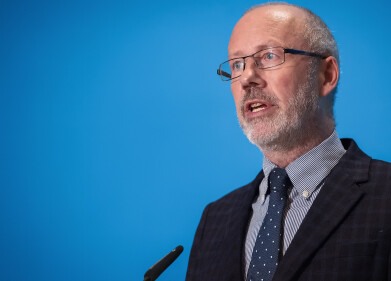
Peter Budd, Professor of Polymer Chemistry at The University of Manchester, said “This collaboration is enabling us to develop both membranes that like positively charged ions and membranes that like negatively charged ions and together they offer exciting possibilities for helping achieve the global goal of clean water for all”.
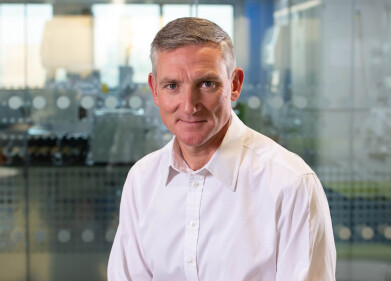
Professor Linda Zou from Khalifa University of Science and Technology said: “We prepared the electrostatically-coupled graphene oxide nanocomposite cation exchange membrane, where all the ion exchange groups are provided by ionic conducting nanomaterials. The collaboration between two teams provided great support to each other in complementary aspects of the research and led to positive research outcomes and more to come”.
Dr Gyorgy Szekely, from King Abdullah University of Science and Technology said: “The application of graphene-based nanocomposites allowed us to control and improve the properties of ion-exchange membranes. The novel separation materials developed for desalination in this collaboration have the potential to increase the efficiency and therefore to cut the costs of the electromembrane processes producing clean water. A portfolio of collaborative projects has been established between the two institutes including graphene based low-density foams for various applications in engineering, graphene-based membranes and inkjet printed graphene sensors for multiple applications including for energy applications.”
*Published in the Journal of Membrane Science


Digital Edition
Lab Asia Dec 2025
December 2025
Chromatography Articles- Cutting-edge sample preparation tools help laboratories to stay ahead of the curveMass Spectrometry & Spectroscopy Articles- Unlocking the complexity of metabolomics: Pushi...
View all digital editions









Events
Jan 21 2026 Tokyo, Japan
Jan 28 2026 Tokyo, Japan
Jan 29 2026 New Delhi, India
Feb 07 2026 Boston, MA, USA
Asia Pharma Expo/Asia Lab Expo
Feb 12 2026 Dhaka, Bangladesh




