-
 Professor Doreen Cantrell (Credit University of Dundee)
 -
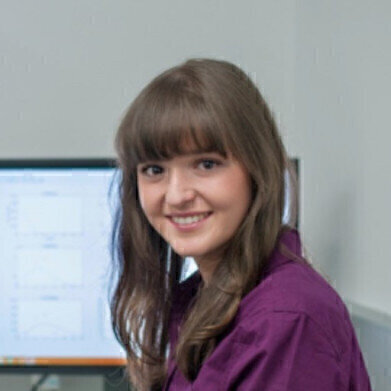 Dr Julia Marchingo (Credit: University of Dundee)
News
Collaborative studies reveal how Immune Cells maintain their killer power
Oct 18 2021
Scientists at the University of Dundee and the University of Cambridge have discovered(1) how Cytotoxic T cells, - the white blood cells that recognise and eliminate threats, such as tumour cells and cells infected with invading viruses –are able to successfully reload the toxic weapons they use as they hunt down targets.
Lead Professor Gillian Griffiths from the Cambridge Institute for Medical Research explained: “T cells are trained assassins that are sent on their deadly missions by the immune system. Once a T cell has found its target, it binds to it and releases its toxic cargo. But what is particularly remarkable is that they are then able to go on to kill and kill again.”
Exactly how this process happens has not been not well understood and a significant breakthrough in the study indicated that the refuelling of the T cells’ toxic weapons is regulated by mitochondria, using a different mechanism than that of their normal function of providing cells with energy.
The team in Cambridge discovered that T cells with problems in mitochondria were defective killers that were unable to replenish key proteins required for killing.
Using the mass spectrometry capability of the Dundee’s Proteomics Facility in the School of Life Sciences, the researchers discovered that it was specifically the proteins that make up the toxic ammunition that were unable to be quickly manufactured and reloaded when the mitochondria was compromised.
Dr Julia Marchingo from the School of Life Sciences explained, “The state-of-the-art proteomics technology available here in the University of Dundee enabled accurate mapping of the proteins that changed when T cells have defective mitochondria.”
Professor Doreen Cantrell, laboratory leader of the Dundee collaborative work added “Having this top-of-the-line technological capability here in Dundee means that scientists in academia and industry from all over the UK come to us for our expertise. This creates really exciting collaborative opportunities to make important discoveries in both basic science and clinical research.”
The research was funded by the Wellcome Trust.
(1)Published in Science
More information online

Digital Edition
Lab Asia Dec 2025
December 2025
Chromatography Articles- Cutting-edge sample preparation tools help laboratories to stay ahead of the curveMass Spectrometry & Spectroscopy Articles- Unlocking the complexity of metabolomics: Pushi...
View all digital editions






Events
Jan 21 2026 Tokyo, Japan
Jan 28 2026 Tokyo, Japan
Jan 29 2026 New Delhi, India
Feb 07 2026 Boston, MA, USA
Asia Pharma Expo/Asia Lab Expo
Feb 12 2026 Dhaka, Bangladesh