
News
Research on Olfactory Receptors wins Neurobiology Prize
Feb 05 2010
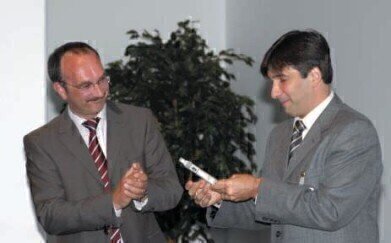
All animals derive essential information from a wealth of different odour signals in their environment. Insects have particularly sophisticated “noses” that allow detection of food, warn of danger and play an important role in many social interactions such as courtship behaviour. Dr Richard Benton, Assistant Professor at the Center for Integrative Genomics, University of Lausanne, Switzerland has won the Eppendorf & Science Prize for Neurobiology 2009 for his research on how insects sense volatile chemical signals.
Dr Benton’s studies have focused on the olfactory receptors of the fruit fly Drosophila melanogaster. His work has revealed unexpected evolutionary parallels between insect chemosensation, immune recognition and synaptic transmission. Dr Benton has shown that insects have invented unusual molecular mechanisms to detect smells, “borrowing” molecules that, in other animals, allow neurons to communicate with each
other or act in the immune system to detect bacteria. Dr Benton writes, “Our discoveries demonstrate that animal nervous systems can evolve very different solutions to the same problem of sensory detection. By targeting these unusual molecular mechanisms with specific chemical inhibitors, it may be possible to control the odour-evoked behaviours of insects that transmit human diseases such as malaria.”
Dr Axel Jahns at Eppendorf headquarters in Hamburg, said: “Sponsored jointly by Eppendorf and the journal Science, this international US$25,000 prize is open to scientists of 35 years of age or younger who have made outstanding contributions to neurobiological research using molecular and cell biology methods. Dr Richard Benton was selected as the winner of the Eppendorf & Science Prize 2009 by a committee of distinguished
scientists chaired by Dr Peter Stern, Senior Editor of Science. The presentation took place in Chicago, USA on October 19, 2009 at a gala dinner for over 80 guests from the scientific community.”
The 2008 prize-winner Dr Mauro Costa-Mattioli from the Department of Neuroscience at Baylor College of Medicine, Texas, USA visited Eppendorf headquarters in Hamburg recently, where he gave a talk on his ground-breaking work on the importance of translational control in the formation of longlasting memories which could help in development of treatments for major brain disorders.
The next deadline for applications for the Eppendorf & Science Prize for Neurobiology is June 15, 2010. For more information about Dr Benton and the Prize, visit www.eppendorf.com/prize.


Digital Edition
Lab Asia Dec 2025
December 2025
Chromatography Articles- Cutting-edge sample preparation tools help laboratories to stay ahead of the curveMass Spectrometry & Spectroscopy Articles- Unlocking the complexity of metabolomics: Pushi...
View all digital editions









Events
Jan 21 2026 Tokyo, Japan
Jan 28 2026 Tokyo, Japan
Jan 29 2026 New Delhi, India
Feb 07 2026 Boston, MA, USA
Asia Pharma Expo/Asia Lab Expo
Feb 12 2026 Dhaka, Bangladesh




