-
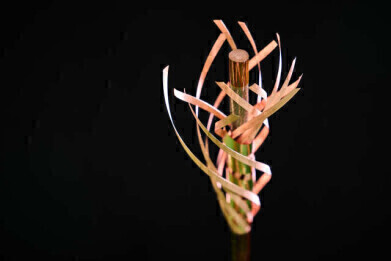 CERN’s High Temperature Superconducting (HTS) rare-earth barium copper oxide (also referred to as REBCO) power transmission cable used to study the feasibility of superconductivity for aircraft. (Credit: CERN)
News
Can Superconducting Technologies support future Clean Aviation?
Jan 10 2023
“Superconducting technologies have fuelled some of the greatest discoveries in high-energy physics and, if applied to aircraft power distribution systems, would drastically reduce their weight and increase their efficiency." José Miguel Jimenez
Airbus subsidiary Airbus UpNext is exploring the potential use of superconducting technologies developed by CERN, the European Instiute of Nuclear Research, for particle accelerators in the electrical distribution systems of future hydrogen-powered aircraft, which could drastically reduce the weight of next-generation aircraft and increase their efficiency.
Focused on the development of a demonstrator known as SCALE (Super-Conductors for Aviation with Low Emissions), if the expected performances and reliability objectives are achieved, the partnership could reach the ambitious target of flying a fully integrated prototype within the next decade.
“In its research, CERN pushes back the limits of science and engineering, and partners with industry to enable innovation, with a positive impact on the environment,” said Raphaël Bello, CERN’s Director of Finance and Human Resources. “Our technologies have the potential to be adapted to the needs of future clean transportation and mobility solutions, as this agreement with Airbus demonstrates. This partnership is only a first step in our journey with the European leader in aviation and shows how much we value the excellence of our Member States’ industry.”
The project is part of Airbus UpNext’s mission is to explore the full potential of emerging technologies with leading research institutes like CERN, which has brought the world some of the most important findings in fundamental physics. Sandra Bour-Schaeffer, CEO of Airbus UpNext. “We are already developing a superconductivity demonstrator called ASCEND (Advanced Superconducting and Cryogenic Experimental powertraiN Demonstrator) to study the feasibility of this technology for electrically powered and hybrid aircraft. Combining knowledge obtained from our demonstrator and CERN’s unique capabilities in the field of superconductors makes for a natural partnership.”
“Superconducting technologies have fuelled some of the greatest discoveries in high-energy physics and, if applied to aircraft power distribution systems, would drastically reduce their weight and increase their efficiency. CERN has over 40 years of expertise in building world-record superconducting systems that are at the core of existing and next-generation particle accelerators. Such systems present negligible resistance to the flow of current, thus transmitting much higher intensities than traditional, heavier, non-superconducting cables,” said José Miguel Jimenez, Head of the Technology department at CERN.
More information online


Digital Edition
Lab Asia Dec 2025
December 2025
Chromatography Articles- Cutting-edge sample preparation tools help laboratories to stay ahead of the curveMass Spectrometry & Spectroscopy Articles- Unlocking the complexity of metabolomics: Pushi...
View all digital editions








Events
Jan 21 2026 Tokyo, Japan
Jan 28 2026 Tokyo, Japan
Jan 29 2026 New Delhi, India
Feb 07 2026 Boston, MA, USA
Asia Pharma Expo/Asia Lab Expo
Feb 12 2026 Dhaka, Bangladesh




