News
Women found to be three times more likely than men to get severe long COVID
Nov 24 2025
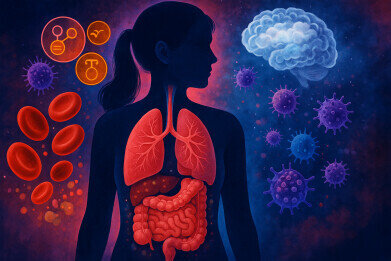
Women with long COVID, particularly those who develop myalgic encephalomyelitis – chronic fatigue syndrome – appear more likely than men to show signs of damage to the gut barrier, signs of chronic inflammation, anaemia and disrupted hormones
Research by a team at the University of Alberta, Edmonton, Canada, has revealed key biological differences that may help explain why women with long COVID, especially those who develop myalgic encephalomyelitis/chronic fatigue syndrome (ME/CFS) tend to experience more severe and persistent symptoms than men. The work has strengthened the case that sex-specific immune and hormonal factors shape how long COVID develops and persists.
Post COVID-19 condition – often referred to as long COVID – is diagnosed when neurological, respiratory or gastrointestinal symptoms develop or continue for three months, or more, after an acute COVID-19 infection with the severe acute respiratory coronavirus 2 (SARS-CoV-2). Symptoms may include profound fatigue, shortness of breath, palpitations, pain, sleep disturbance and cognitive problems which often described as ‘brain fog’.
The prevalence of long COVID is roughly three times higher for women than for men but until now the underlying biology behind this difference has remained unclear.

Austrian researchers identify persistent immune protein as biomarker for complications of Long COVID-19
A study at the Medical University of Vienna has found that the immune molecule pentraxin 3 remains elevated in patients months after a severe COVID-19 infection, suggesting a potential biomarker fo... Read More
In this study, the researchers focused on people living with the most debilitating form of long COVID, whose symptoms closely resembled ME/CFS – a chronic, multisystem disease that also disproportionately affects women. According to Nature Medicine, in August 2024, estimated that cumulative global incidence of long COVID is about 400 million individuals which underlines the scale of the clinical and social problem that such work seeks to address.
“We are focusing on a subset of patients with the most devastating symptoms that are very similar to chronic fatigue syndrome,” said principal investigator Professor Shokrollah Elahi, an immunology specialist in the Mike Petryk School of Dentistry at the University of Alberta.
“They did not have these symptoms prior to COVID and most had only mild COVID-19 disease, so they were not hospitalised,” he added.
By concentrating on this group, the team aimed to identify biological signatures that might distinguish those with long-lasting, life-altering illness from individuals who recovered fully after infection.
The team carried out blood and genetic tests on 78 patients with long COVID approximately one year after their acute diagnosis, alongside a control group of 62 people who had recovered from SARS-CoV-2 infection without developing long COVID. Through analysis of immune cells, soluble biomarkers in the blood and RNA sequencing, the researchers identified a distinct immune signature in female versus male patients, pointing to different pathways that may drive chronic symptoms in women.
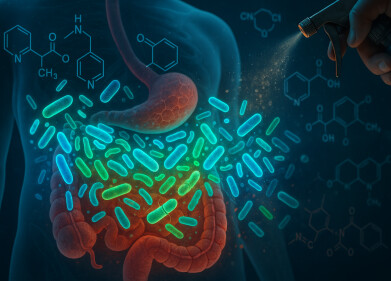
One of the clearest differences involved evidence of so-called ‘gut leakiness’ in female patients. The team observed elevated blood levels of intestinal fatty acid-binding protein – lipopolysaccharide – and the soluble protein CD14 in women with long COVID. These molecules are well-recognised indicators of gut barrier damage and microbial translocation. When the intestinal lining loses integrity, components of bacteria from the gut lumen can cross into the bloodstream, where they may trigger widespread immune activation and low-grade systemic inflammation.
“This suggests that probably at the earliest stage of disease when patients get an acute SARS-CoV-2 infection, there is a tendency that the females’ guts are more prone to viral infection,” said Professor Elahi.
He noted that an intestine that is more vulnerable to viral damage could remain chronically inflamed, with knock-on effects for the immune system throughout the body. The findings add to a growing body of work that implicates the gut–immune axis in post-viral syndromes.
The team also found evidence of reduced red blood cell production in women with long COVID, consistent with anaemia. Levels of inflammatory factors appeared higher in these patients, and the researchers suggested that chronic inflammation in females with long COVID may impair blood cell formation in the bone marrow. Anaemia can contribute to fatigue, breathlessness, headaches and difficulties with concentration, which are already common features of long COVID and ME/CFS.
In addition to gut and blood abnormalities, the researchers reported dysregulated sex hormones in both female and male long COVID patients. Women with long COVID tended to show reduced testosterone levels, while men exhibited decreased oestrogen. Levels of cortisol, a hormone that helps regulate stress responses and metabolism, were lower in both sexes. Since sex hormones help to fine-tune immune function, such disturbances could plausibly amplify or prolong inflammatory responses after viral infection.
The team also observed that women with lower testosterone levels had higher levels of inflammatory markers in their blood. Testosterone usually serves to temper inflammation, so reduced concentrations may leave women more vulnerable to sustained immune activation.
In the study, lower testosterone levels in women correlated with central long COVID symptoms, including brain fog, depression, pain and fatigue. This pattern led the researchers to propose that hormone imbalance could play an important role in the persistence and severity of long COVID, particularly in female patients.
These results share several features with the biology of idiopathic, or unexplained, ME/CFS. That condition also disproportionately affects women and has long been associated with chronic immune activation and debilitating fatigue. However, there are differences. For example, anaemia is not typically associated with ME/CFS, even though chronic inflammation is a hallmark of the disease. The overlap and distinctions between long COVID and ME/CFS are likely to remain a focus of research, not least because insights into one condition may inform treatment approaches for the other.
The work of the Elahi group has been reinforced by another recent international study of more than 500 patients, which also identified anaemia as a major biological underpinning of long COVID. Taken together, these findings suggest that impaired oxygen delivery and chronic inflammatory stress may contribute significantly to the symptom burden of many patients, and that these processes may affect women in particular ways.
Professor Elahi now plans to verify his group’s findings in experimental models and, ultimately, in people. He intends to test potential treatments in mice that have long COVID-like illness and is seeking funding for a clinical trial. In such a trial, the goal would be to evaluate targeted interventions that respond to each individual’s biological profile rather than to apply a single therapy to every patient.
He proposes an individualised approach to treatment tailored to each patient’s test results, which might include therapies to correct anaemia, anti-inflammatory drugs to dampen aberrant immune responses, and carefully monitored use of sex hormones to restore a healthier balance where appropriate. In principle, such personalised treatment strategies could reduce the symptom burden, improve quality of life and help prevent long COVID from becoming a permanent disability for many patients.
Professor Elahi also intends to continue his exploration of similarities between the neurological symptoms of long COVID and those associated with human immunodeficiency virus (HIV) infection. Both conditions can involve cognitive impairment, mood changes and sleep disturbance and both show evidence of chronic immune activation. By comparing the biological pathways that link viral infection to long-term neurological effects in these disorders, researchers hope to identify common targets that may open the way to more effective therapies for people with long COVID and related post-viral syndromes.
For further reading please visit: 10.1016/j.xcrm.2025.102449

Digital Edition
Lab Asia Dec 2025
December 2025
Chromatography Articles- Cutting-edge sample preparation tools help laboratories to stay ahead of the curveMass Spectrometry & Spectroscopy Articles- Unlocking the complexity of metabolomics: Pushi...
View all digital editions










Events
Jan 21 2026 Tokyo, Japan
Jan 28 2026 Tokyo, Japan
Jan 29 2026 New Delhi, India
Feb 07 2026 Boston, MA, USA
Asia Pharma Expo/Asia Lab Expo
Feb 12 2026 Dhaka, Bangladesh




