News
AI tool reframes methodologies for the forecasting of pandemic potential infectious diseases
Jun 18 2025
First to use large language modelling to predict infectious disease risk
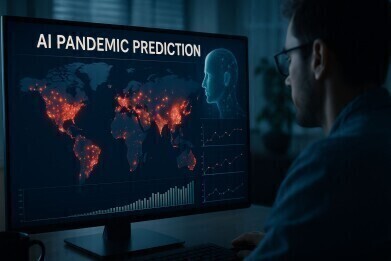
An artificial intelligence tool has been newly developed by researchers at Johns Hopkins and Duke universities in the United States which has outperformed existing forecasting methods used to predict the spread of infectious diseases.
Backed by US federal funding, the system is the first to use large language modelling – the technology behind tools such as ChatGPT – to anticipate disease outbreaks. According to the researchers, it could transform how public health officials track, manage and respond to illnesses such as influenza and COVID-19.
“COVID-19 elucidated the challenge of predicting disease spread due to the interplay of complex factors that were constantly changing,” said Dr Lauren Gardner of Johns Hopkins University, a modelling expert and co-creator of the widely used COVID-19 dashboard. “When conditions were stable the models were fine. However, when new variants emerged or policies changed, we were terrible at predicting the outcomes because we didn’t have the modelling capabilities to include critical types of information. The new tool fills this gap.”
Published in Nature Computational Science, the work introduces PandemicLLM – a model that goes beyond mathematical forecasting by reasoning through real-world conditions, such as the emergence of new variants or the imposition of public health measures.
During testing, researchers provided the model with data streams including inputs not previously used in pandemic prediction tools. PandemicLLM consistently outperformed other methods, including the top-performing models on the US Centers for Disease Control and Prevention’s CovidHub, in forecasting disease trends and hospitalisation rates one to three weeks in advance.
“A pressing challenge in disease prediction is trying to figure out what drives surges in infections and hospitalisations, and to build these new information streams into the modelling,” Gardner added.
PandemicLLM draws on four key categories of data:
- Spatial data at state level, including demographics, healthcare infrastructure and political affiliations
- Epidemiological time series, such as case numbers, hospital admissions and vaccination rates
- Public health policy data, including the type and severity of government responses
- Genomic surveillance data on variant characteristics and their prevalence
By integrating these diverse datasets, the model can infer how different elements interact to shape the course of an outbreak.
To assess its effectiveness, the team applied PandemicLLM retrospectively to the COVID-19 pandemic across individual US states over a 19-month period. The model demonstrated particular strength when case numbers were volatile or public health conditions were rapidly evolving.
“Traditionally we use the past to predict the future,” said co-author Dr Hao “Frank” Yang, an assistant professor of civil and systems engineering at Johns Hopkins.
“But that doesn’t give the model sufficient information to understand and predict what’s happening. Instead, this framework uses new types of real-time information,” he said.
The model is adaptable for forecasting other infectious diseases such as avian influenza, monkeypox and RSV, provided appropriate data are available.
Looking ahead, the researchers hope to extend the technology to model human behaviour. By capturing how individuals make decisions about their health, such tools could enable more nuanced and effective public health strategies.
“We know from COVID-19 that we need better tools so that we can inform more effective policies,” Gardner said.
“There will be another pandemic, and these types of frameworks will be crucial for supporting public health response,” he concluded.
Other contributors to the work included Johns Hopkins PhD students Hongru Du, Shaochong Xu and Yang Zhao; Jianan Zhao of the University of Montreal; Professor Xihong Lin of Harvard University; and Professor Yiran Chen of Duke University.
For further reading please visit: 10.1038/s43588-025-00798-6




Digital Edition
Lab Asia Dec 2025
December 2025
Chromatography Articles- Cutting-edge sample preparation tools help laboratories to stay ahead of the curveMass Spectrometry & Spectroscopy Articles- Unlocking the complexity of metabolomics: Pushi...
View all digital editions









Events
Jan 21 2026 Tokyo, Japan
Jan 28 2026 Tokyo, Japan
Jan 29 2026 New Delhi, India
Feb 07 2026 Boston, MA, USA
Asia Pharma Expo/Asia Lab Expo
Feb 12 2026 Dhaka, Bangladesh




