Mills and grinders
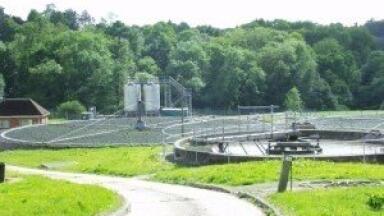
Sewage sludge is for most people an unpleasant by-product of civilisation and is considered worthless, problematic waste. Not so for several researchers. In the professional world it is well-known that besides many inorganic substances, also many bacteria are contained in sewage sludge and that these bacteria contain protein. With increasing significance of closed substance cycle waste management, the scientific focus is also on such substances. Examined was so called excess sludge of biological sewage treatment. Bacteria are contained foremost in this sludge.
Now bacteria are not just bacteria. The professional world divides them into several groups, which for example are differentiated according to their behaviour during the so called Gram stain. They have in common though, that they protect their substances with a more or less solid cellular wall. Particularly the most common bacteria in sewage sludge have an especially solid cellular wall. At the University of Applied Sciences in Merseburg, Germany, for the thesis of Mr Michael Herrmann, the destruction of cellular walls was examined under the guidance of Professor Dr Winkler, University of Applied Sciences, Merseburg and Dr Schaffer, IVG mbh Schkopau. As a dimension for the decomposition, the recovery index was designated. For this, the protein concentration during the solid phase was determined prior as a reference value. Different decomposition methods were examined in the laboratory.
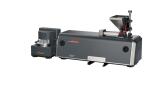
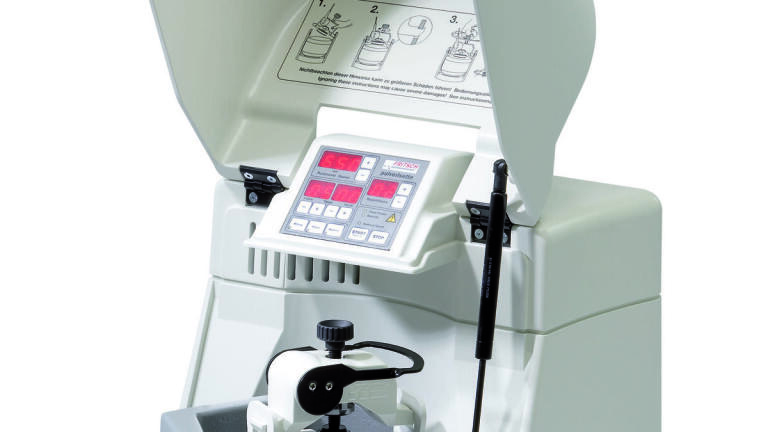
Mechanical decomposition methods to be mentioned: Planetary Mono Mill PULVERISETTE 6 classic line, Fritsch Milling and Sizing; Ultrasonic Homogenizer SONOREX RK 1028 CH, Bandelin electronic GmbH; Homogenizer ULTRA-TURRAX T25, IKA Laboratory Equipment.
Acid hydrolysis was utilised as the chemical procedure. For the characterisation of the effectiveness of the decomposition a protein assay was conducted.
In the planetary mill, dry matter contents of approximately 10, 20 and 40 g/l were examined. As a grinding medium glass pearls of 0.4 to 0.6 mm diameter were utilised. The volume amount of the grinding medium was matched 1.1 to the liquid volume. Treatment times of 2, 5 and 10 minutes were examined. In principle it was established that with increasing processing duration and a decreasing of the dry matter contents, the recovery index rises. The comparative observation of the decomposition methods reveals that samples processed with the Planetary Mono Mill PULVERISETTE 6 classic line have the highest recovery index.



.jpg)
-(2).jpg)