Microscopy & microtechniques
Report on High Temperature Stage Use for Research on the Properties of 2D Materials
Sep 08 2016
Market leaders in temperature controlled microscopy, Linkam Scientific Instruments, report on the use of their high temperature TS1500 stage for research into the properties of 2D materials.
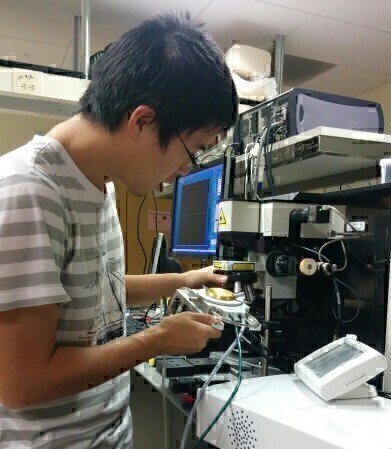
Professor Yong Zhang is the Bissell Distinguished Professor in the Electrical and Computer Engineering Department at the University of North Carolina Charlotte (UNCC). He leads a group which studies how an epitaxial or supporting substrate can impact the material properties of a 2D material that is often presumed to have weak bonding with the substrate. In addition, they investigate a thermal activation process that requires high temperature capability. In turn, a high temperature experimental set up allows the study of thermal stability under various conditions.
Since choosing the Linkam TS1500 high temperature stage for their work, the group has used the stage multiple times to study different material systems with the goals of understanding the effects of substrate on 2D materials to reveal the intrinsic properties of the materials and control and modify them with substrate engineering. These include black phosphorus, monolayer molybdenum disulphide (MoS2), tungsten disulphide (WS2) and graphene. Other materials, such as copper-zinc-tin selenide (CZTSe), a new solar cell material, have resulted in publications.
Professor Zhang has noted several key findings from this research. He said: “We have made some important findings which are common among 2D materials. Firstly, we saw that film properties are sensitive to not only the substrate type (e.g. SiO2 vs. sapphire) but also the bonding situation (e.g. epitaxially grown vs. transferred). Second, we found that high temperature studies reveal how film morphology impacts the material properties and how morphology changes with heating. We also saw that the sensitivity of the substrate influence on the film thickness depends on the material property of interest. For instance, the effect of the substrate remains significant for thermal conductivity of the film even the film is already relatively thick, but is much less significant for electronic properties.”
.jpg)
-(2).jpg)


Digital Edition
Lab Asia Dec 2025
December 2025
Chromatography Articles- Cutting-edge sample preparation tools help laboratories to stay ahead of the curveMass Spectrometry & Spectroscopy Articles- Unlocking the complexity of metabolomics: Pushi...
View all digital editions







Events
Jan 21 2026 Tokyo, Japan
Jan 28 2026 Tokyo, Japan
Jan 29 2026 New Delhi, India
Feb 07 2026 Boston, MA, USA
Asia Pharma Expo/Asia Lab Expo
Feb 12 2026 Dhaka, Bangladesh