-
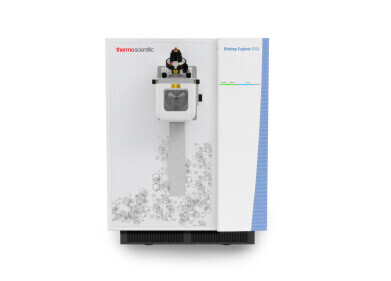
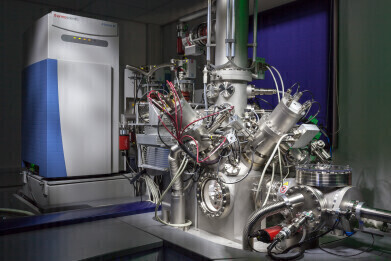 A Time of Flight Secondary Ion Mass Spectrometer (ToF-SIMS) with hybrid OrbiTrap based on the prototype at the NPL, Teddington. Credit: University of Nottingham
Mass spectrometry & spectroscopy
Mass spectrometry to view molecular surface of lipid nanoparticles for improved vaccine and drug delivery
May 27 2025
A University of Nottingham’s School of Pharmacy team has developed a cryogenic mass spectrometry approach to allow for the depth profiling of frozen lipid nanoparticles’ (LNPs) constituent molecules to reveal their layers and orientation.
LNPs most notably became prominent with their application to deliver the RNA in the COVID-19 mRNA vaccine types produced by Moderna and Pfizer BioNTech. They can also be used to deliver other kinds of therapies such as to treat the rare hereditary disease of polyneuropathy.
The Nottingham research allows for better understanding of the relative positions of each component within a lipid nanoparticle. This information means the behaviour of LNPs can be seen and it will contribute to drug development with unique bio-properties that are more efficient and safer. At scale the findings could also have future application in quality control especially during scale-up in the drug manufacturing process.
“Characterising the native surface of delicate hydrated pharmaceutical systems used in the body has been a significant challenge for some time. This cryogenic molecular surface and interfacial analysis advance makes this exciting possibility [now] real.
“We expect to apply this new method to many systems, including lipid nanoparticles, other pharmaceutical delivery systems and hydrated biomaterials,” said Professor Morgan Alexander who was the study lead.
"The research team collaborated in the work with Sail Biomedicines, Cambridge, Massachusetts (MA), USA; Massachusetts Institute of Technology (MIT), Cambridge, MA and the UK’s National Physical Laboratory (NPL), London.
The collaborators used the London lab’s Cryogenic OrbitrapTM secondary ion microscopy (Cryo-OrbiSIMS) to provide structural details of the lipid nanoparticles. The Cryo-OrbiSIMS is a high pressure, cryo-preparation methodology which keeps biological samples maintained near their native state.
The Cryo-OrbiSIMS is a cutting-edge imaging mass spectrometer originally developed in collaboration between NPL and GlaxoSmithKline and Thermo Fisher Scientific. It combines high-resolution Orbitrap mass spectrometry with secondary ion mass spectrometry and operates at cryogenic temperatures in order to preserve delicate biological samples and volatile compounds during analysis.
“Effective drug delivery relies on an intricate mix of molecules in lipid nanoparticles to effectively deliver RNA therapeutics, but these can vary in efficacy and can be difficult to engineer.
"This research provides a new way of characterising and understanding the make-up of lipid nanoparticles which could pave the way for engineering more potent and targeted LNPs to enable the broadest application of RNA therapies for all types of diseases,” added Dr Robert Langer of MIT, who is also an author on the research paper.
Future areas of development include lung-targeted gene therapy, which is particularly challenging, but LPNs have the potential to treat a range of diseases including cystic fibrosis, idiopathic pulmonary fibrosis, chronic obstructive pulmonary disease, asthma and more.
For further reading please visit: 10.1038/s42004-025-01526-x
Digital Edition
Lab Asia Dec 2025
December 2025
Chromatography Articles- Cutting-edge sample preparation tools help laboratories to stay ahead of the curveMass Spectrometry & Spectroscopy Articles- Unlocking the complexity of metabolomics: Pushi...
View all digital editions








Events
Jan 21 2026 Tokyo, Japan
Jan 28 2026 Tokyo, Japan
Jan 29 2026 New Delhi, India
Feb 07 2026 Boston, MA, USA
Asia Pharma Expo/Asia Lab Expo
Feb 12 2026 Dhaka, Bangladesh




