Research news
US-based research team reuse diabetes drugs to enhance CAR T therapy for bladder cancer
Sep 22 2025
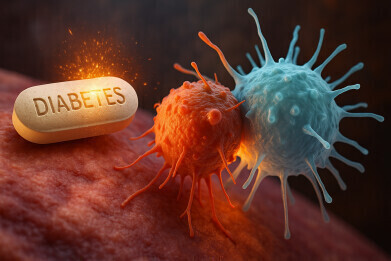
Scientists at the University of California, San Francisco have repurposed an older class of diabetes drugs to enhance the activity of NECTIN4-CAR T cell therapy against bladder cancer. By stimulating a metabolic pathway that increases NECTIN4 expression, the approach has made tumour cells more vulnerable to targeted treatment, offering hope for patients with metastatic urothelial carcinoma who no longer respond to standard therapies
Urothelial carcinoma is the most common form of bladder cancer. The disease is sometimes referred to as transitional cell carcinoma – and accounts for around 90% of all bladder cancers across Western countries. Despite recent oncology advances the five-year survival rate for metastatic disease has remained between five and ten per cent.
Enfortumab vedotin has become the front-line standard of care around the world. While it produces a response in at least 40 per cent of patients, long-term remission and sustained survival remain rare when tumours prove resistant to treatment. It is an antibody–drug conjugate therapy and targets NECTIN4, a protein expressed on the surface of bladder cancer cells.
In a preclinical study, researchers at the University of California, San Francisco, have sought to improve outcomes for urothelial carcinoma patients by developing a chimeric antigen receptor (CAR) T cell therapy in combination with thiazolidinediones – an older class of drugs used to treat diabetes – to increase NECTIN4 expression and make tumours more susceptible to targeted therapy.
“We sought to understand how cancer cells regulated expression of NECTIN4, and whether we could leverage that information to enhance NECTIN4 expression and increase the efficacy of the CAR T therapy,” said study senior author Dr. Jonathan Chou, MD, PhD, assistant professor in the Division of Haematology and Oncology at the University of California, San Francisco.
“We found that a pathway which typically controls fat metabolism called PPAR gamma, facilitates NECTIN4 expression. Interestingly, we repurposed an old class of diabetes drugs – rosiglitazone and pioglitazone – which stimulate PPAR gamma, to enhance NECTIN4 expression,” he added.
The team, led by Dr. Kevin Chang, had already shown that NECTIN4 expression was highly variable. For therapies that depend on a surface protein target, such as CAR T cells, the level of expression strongly influenced efficacy. They therefore investigated whether bladder cancer cells resistant to one NECTIN4-targeted therapy could still respond to NECTIN4 CAR T cells.
Working with Dr. Carissa Chu, assistant professor in the Department of Urology at the University of California, San Francisco, and colleagues at Memorial Sloan Kettering Cancer Center, New York, the group analysed tumour biopsies taken before patients began treatment with enfortumab vedotin and after their disease progression.
They found that most tumours continued to express NECTIN4. By priming bladder cancer cells with rosiglitazone – the oral antidiabetic drug that belongs to the thiazolidinedione class – were able to increase the efficacy of NECTIN4 CAR T cell therapy in cell line and animal models.
“By identifying and using a strategy to turn low-expressing tumours into higher-expressing tumours in both enfortumab vedotin-naïve and enfortumab vedotin-resistant settings, we made the tumour cells more susceptible to NECTIN4-CAR T therapy,” said Chou.
“These preclinical results lay the groundwork for further CAR T cell development in bladder cancer and urothelial carcinomas and suggest drug combinations that will expand the therapeutic window of NECTIN4-targeting therapies,” he said.
For further reading please visit: 10.1038/s41467-025-62710-0




Digital Edition
Lab Asia Dec 2025
December 2025
Chromatography Articles- Cutting-edge sample preparation tools help laboratories to stay ahead of the curveMass Spectrometry & Spectroscopy Articles- Unlocking the complexity of metabolomics: Pushi...
View all digital editions









Events
Jan 21 2026 Tokyo, Japan
Jan 28 2026 Tokyo, Japan
Jan 29 2026 New Delhi, India
Feb 07 2026 Boston, MA, USA
Asia Pharma Expo/Asia Lab Expo
Feb 12 2026 Dhaka, Bangladesh




