Research news
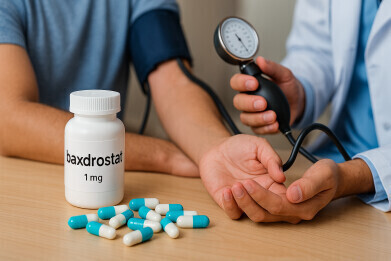
New drug baxdrostat lowers resistant hypertension in global Phase III trial
Sep 22 2025
An extensive Phase III trial has shown that the drug baxdrostat can significantly reduce blood pressure in patients with treatment-resistant hypertension
A novel treatment has significantly lowered blood pressure in patients whose levels remained dangerously high despite taking multiple medicines, according to the results of a Phase III clinical trial led by a team from University College London (UCL), in the United Kingdom.
Worldwide, there an estimated 1.3 billion people who have hypertension, and in around half of cases the condition is uncontrolled or resistant to treatment. These patients face a markedly increased risk of heart attack, stroke, kidney disease and premature death.
The international BaxHTN trial – led by Professor Bryan Williams of the UCL Institute of Cardiovascular Science and sponsored by AstraZeneca – investigated the novel drug baxdrostat. The treatment, taken orally as a tablet, was tested in nearly 800 patients across 214 clinics worldwide. The study received additional support from the National Institute for Health and Care Research (NIHR) Biomedical Research Centre at University College London Hospitals.
The results showed that after 12 weeks, patients who received baxdrostat at a dose of 1 milligram or 2 milligrams once daily experienced a reduction in systolic blood pressure of around 9 to 10 millimetres of mercury compared with placebo. This degree of reduction is large enough to cut cardiovascular risk. Approximately four in ten patients reached healthy blood pressure levels, compared with fewer than two in ten in the placebo group.
“Achieving a nearly 10 millimetre of mercury reduction in systolic blood pressure with baxdrostat in the BaxHTN Phase III trial is exciting, as this level of reduction is linked to substantially lower risk of heart attack, stroke, heart failure and kidney disease,” said Professor Williams.
Blood pressure is strongly influenced by aldosterone, a hormone that regulates salt and water balance in the kidneys. Excess aldosterone causes the body to retain salt and water, driving blood pressure higher and making it resistant to treatment. Attempts to target this dysregulation have spanned decades but have proved difficult to achieve. Baxdrostat works by blocking aldosterone production, thereby directly addressing a central driver of treatment-resistant hypertension.
“These findings are an important advance in treatment and in our understanding of the cause of difficult to control blood pressure,” said Professor Williams.
“Around half of people treated for hypertension do not have it controlled, however this is a conservative estimate and the number is likely [to be] higher, especially as the target blood pressure we try to reach is now much lower than it was previously.*
“In patients with uncontrolled or resistant hypertension, the addition of baxdrostat [at either] 1 or 2 milligrams once daily to background antihypertensive therapy led to clinically meaningful reductions in systolic blood pressure, which persisted up to 32 weeks with no unanticipated safety findings.
“This suggests that aldosterone is playing an important role in causing difficult to control blood pressure in millions of patients and offers hope for more effective treatment in the future,” he said.
Historically, higher-income Western countries reported the highest levels of hypertension. However, largely due to dietary changes such as reduced salt intake, the prevalence is now greater in Eastern and lower-income nations. More than half of those affected live in Asia, including 226 million in China and 199 million in India.**
“The results suggest that this drug could potentially help up to half a billion people globally – and as many as 10 million people in the United Kingdom alone, especially at the new [lower] target level for optimal blood pressure control,” Professor Williams said.
*The ESC 2024 hypertension guidelines recommended a target blood pressure of less than 130/80 mmHg. Prior to 2024 the target had been 140/90 mmHg.
** Figures from Blood Pressure UK
For further reading please visit: 10.1056/NEJMoa2507109



Digital Edition
Lab Asia Dec 2025
December 2025
Chromatography Articles- Cutting-edge sample preparation tools help laboratories to stay ahead of the curveMass Spectrometry & Spectroscopy Articles- Unlocking the complexity of metabolomics: Pushi...
View all digital editions










Events
Jan 21 2026 Tokyo, Japan
Jan 28 2026 Tokyo, Japan
Jan 29 2026 New Delhi, India
Feb 07 2026 Boston, MA, USA
Asia Pharma Expo/Asia Lab Expo
Feb 12 2026 Dhaka, Bangladesh




