-
-
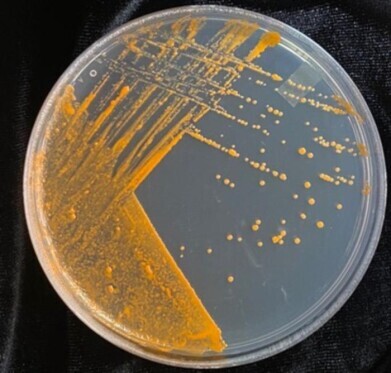 Gordonia alkanivorans strain Vvg01, capable of degrading guaiacol as a sole carbon source, growing on minimal media. Credit: Claudia Castro, CC-BY 4.0 (https://creativecommons.org/licenses/by/4.0/)
Research news
Bacteria found on grape vines shown to neutralise smoke taint in wildfire-exposed wines
Nov 10 2025
Researchers have identified naturally occurring bacteria on grapevines that can break down guaiacol – the volatile phenol responsible for smoky, ashy flavours in wines made from grapes exposed to wildfire smoke. The discovery could lead to biotechnological methods to rescue smoke-affected vintages and protect the industry’s economic resilience
Researchers at the United States Department of Agriculture’s Agricultural Research Service have found that bacteria naturally present on grape leaves can degrade guaiacol, a volatile phenol responsible for the smoky, ashy flavour of wines produced from grapes exposed to wildfire smoke. The discovery may help the wine industry to develop biological tools to rescue smoke-affected vintages.
Wildfires have become increasingly frequent in wine-producing regions of the US West Coast. Grapes can absorb compounds from smoke which persist through fermentation, leading to a ‘smoke taint’ taste. Previous studies have shown that soil bacteria are capable of breaking down guaiacol, prompting researchers to consider whether microbes living on grapevines could perform the same function and thereby improve wine quality after smoke exposure.
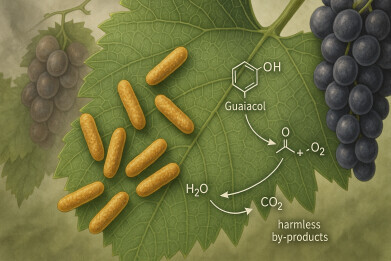
To explore this hypothesis, the researchers collected leaves from two grape varieties – Chardonnay and Cabernet Sauvignon – screened them for bacteria capable of metabolising guaiacol. They identified two strains of the same species, Gordonia alkanivorans, which were able to use guaiacol as their sole carbon source in laboratory tests.
Genetic analysis revealed several genes involved in guaiacol degradation, including one named guaA. When the guaA gene was deleted, the bacteria lost the ability to break down guaiacol, confirming that this gene plays a critical role in the metabolic process.
The team also exposed living Merlot plants to smoke produced by a culinary smoker to simulate wildfire conditions. They examined the bacterial communities on leaves and grapes before and after exposure and observed significant changes in the microbiome within days. In particular, they found a marked increase in bacteria belonging to the class Bacilli, which are known to survive in harsh environments.
Smoke-tainted wine has cost the industry millions of dollars in lost revenue in recent years. The discovery that certain members of the grapevine microbiome can naturally degrade smoke-related compounds could therefore provide a foundation for biotechnological approaches to reduce or eliminate unwanted smoky flavours.
“In this study, we identified two members of the grape microbiome capable of degrading guaiacol, a volatile phenol that contributes to smoke taint of wine.
“We also identified changes in the grape microbiome caused by simulated wildfire smoke with the goal of providing genetic tools to help combat smoke taint,” said lead author Dr. Claudia Castro.
“Working in the vineyard along with our collaborator Dr Tom Collins and his team to set up the wildfire smoke simulation is one of my best memories of this study. Probably second best to finding a guaiacol-degrading microbe that lives on the surface of grapes,” she added.
The findings highlight the potential to apply microbiological knowledge to viticulture, suggesting that naturally occurring bacteria may one day form part of a sustainable strategy to protect the flavour and economic value of wines produced in regions affected by wildfire smoke.
For further reading please visit: http://plos.io/4650m0C



Digital Edition
Lab Asia Dec 2025
December 2025
Chromatography Articles- Cutting-edge sample preparation tools help laboratories to stay ahead of the curveMass Spectrometry & Spectroscopy Articles- Unlocking the complexity of metabolomics: Pushi...
View all digital editions










Events
Jan 21 2026 Tokyo, Japan
Jan 28 2026 Tokyo, Japan
Jan 29 2026 New Delhi, India
Feb 07 2026 Boston, MA, USA
Asia Pharma Expo/Asia Lab Expo
Feb 12 2026 Dhaka, Bangladesh




