Research news
First ever in-human transplantation of enzyme-converted donor kidney offers hope for universal organ matching
Oct 03 2025
Scientists have reported the first successful human transplant of a kidney converted from blood type A to universal type O, using enzymes developed at the University of British Columbia. The procedure has shown that such modified organs can function in the human body without immediate rejection, raising the prospect of faster, safer transplants for patients worldwide
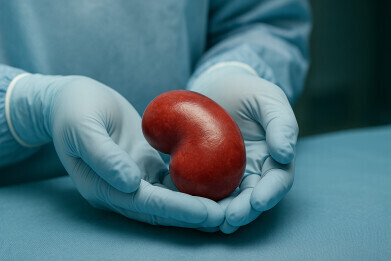
The first successful human transplant of a kidney converted from blood type A to universal type O has been reported, using a class of enzymes developed at the University of British Columbia (UBC), Canada, to prevent rejection caused by blood-type incompatibility. The achievement has marked a significant advance towards reducing long waiting times for transplants and has the potential to improve patient access to donor organs worldwide.
Researchers transplanted the enzyme-treated kidney into a brain-dead recipient – with the explicit consent of the individual’s family – in order to observe the immune response. For two days the kidney functioned normally without evidence of hyperacute rejection – the aggressive immune response that typically destroys an incompatible organ within minutes.
By the day three, some blood-type markers had reappeared and a mild immune reaction was triggered. Nevertheless, the damage was substantially less than would be expected in a conventional mismatch and the investigators observed early signs of tolerance.
“This is the first time we have seen this play out in a human model,” said Dr Stephen Withers, professor emeritus of chemistry at UBC and co-lead of the enzyme development programme.
“It gives us invaluable insight into how to improve long-term outcomes,” he added.
The achievement in the conclusion of research which has been more than a decade in the making. In the early 2010s, Dr Withers and colleague Dr Jayachandran Kizhakkedathu, professor in the department of pathology and laboratory medicine and the Centre for Blood Research at UBC, investigated methods to produce universal donor blood by removing the sugars that determine blood type.
These same sugars, known as antigens, are also found on the surface of blood vessels within organs. When an immune system encounters an unfamiliar antigen, it mounts an attack that often leads to immediate organ failure.
This immunological barrier has had profound consequences for transplantation. Patients with type O blood – who make up more than half of kidney waitlists – can only receive type O organs, yet type O kidneys are often transplanted into other recipients because they are universally compatible. As a result, type O patients typically face an additional two to four years of dialysis waiting for a donor compared with other blood type patients and many die while waiting.
Conventional strategies to overcome such mismatches involve prolonged and intensive treatment to remove antibodies and suppress the recipient’s immune system and are generally restricted to living-donor organs. By contrast, the UBC approach modifies the donor organ itself, making it compatible with any recipient regardless of blood type.
This innovation could reduce complications, accelerate the transplant process – and for the first time make blood-type mismatched kidneys from deceased donors a viable option – an important factor when speed is critical to save lives.
The breakthrough rested on the 2019 discovery by the UBC group of two highly efficient enzymes that strip away the sugar defining type A blood, effectively converting it to type O.
“These enzymes are highly active, highly selective, and work at very low concentrations. That made the whole concept feasible,” said Dr Kizhakkedathu.
In 2022, researchers in Toronto demonstrated that the same principle could be applied to lungs. Subsequent collaborations with the University of Cambridge, UK, confirmed the approach on lungs and kidneys outside the body, but whether an enzyme-converted organ could withstand the human immune system remained an open question.
That question was answered in late 2023 when Dr Kizhakkedathu saw data from collaborators who had successfully transplanted an enzyme-treated kidney into a brain-dead recipient.
“It was working beautifully – I was so thrilled! It was a dream moment.”
Blood-type antigens act as molecular identifiers and the UBC enzymes function as ‘molecular scissors’ to remove the antigen that defines type A, thereby unmasking the universal type O surface beneath.
“Once that is done, the immune system no longer sees the organ as foreign,” said Dr Withers.
The research team has stated that regulatory approval for clinical trials is now the next step. Development of the enzyme technology for transplant applications will be undertaken by Avivo Biomedical, a UBC spin-off company which also intends to explore the creation of universal donor blood for transfusion medicine.
“This is what it looks like when years of basic science finally connect to patient care.
“Seeing our discoveries edge closer to real-world impact is what keeps us pushing forward.” added Dr Withers.
For further reading please visit: 10.1038/s41551-025-01513-6



Digital Edition
Lab Asia Dec 2025
December 2025
Chromatography Articles- Cutting-edge sample preparation tools help laboratories to stay ahead of the curveMass Spectrometry & Spectroscopy Articles- Unlocking the complexity of metabolomics: Pushi...
View all digital editions









Events
Jan 21 2026 Tokyo, Japan
Jan 28 2026 Tokyo, Japan
Jan 29 2026 New Delhi, India
Feb 07 2026 Boston, MA, USA
Asia Pharma Expo/Asia Lab Expo
Feb 12 2026 Dhaka, Bangladesh




