-
-
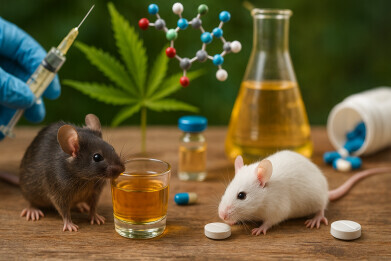
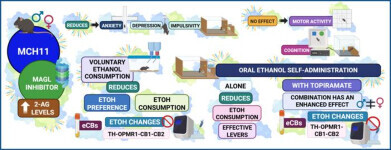 In mice, a novel monoacylglycerol lipase inhibitor (MCH11) reduced ethanol intake and drinking motivation, yielding anxiolytic and antidepressant-like effects, with sex-dependent efficacy. Credit: Instituto de Neurociencias UMH-CSIC
Research news
Experimental MAGL inhibitor MCH11 reduces alcohol intake in mice with sex-specific effects
Nov 26 2025
A preclinical study at Miguel Hernández University of Elche, Spain, has shown that the monoacylglycerol lipase inhibitor MCH11 lowered alcohol consumption, anxiety and depressive-like behaviour in male and female mice, with stronger effects in males
A novel compound developed at Miguel Hernández University of Elche (UMH) in Spain has reduced voluntary alcohol intake and motivation to drink in mice, with clear differences between males and females. The compound which is a monoacylglycerol lipase inhibitor – known as MCH11 – remains at a preclinical stage of investigation, yet researchers argue that it may yet help to guide more personalised treatments for alcohol use disorder.
The findings concluded a four-year research programme conducted by the Institute of Neurosciences, a joint UMH – Spanish National Research Council centre, together with the Institute for Health and Biomedical Research of Alicante and the Primary Care Addiction Research Network. The group reported sustained reductions in both alcohol preference and alcohol consumption in animal models that simulate key features of human dependence.
Alcohol use disorder remains one of the most prevalent addictions worldwide and causes approximately 2.6 million deaths every year, according to recent global health estimates.
“However, current therapies show serious limitations,” said Dr. Abraham Torregrosa, a researcher at UMH and first author of the study. Torregrosa noted that up to 70% of patients return to harmful levels of alcohol use within the first year after treatment, which underlines the need for more effective pharmacological options that target the biological roots of dependence.
To identify such options, the team turned to the endocannabinoid system, a complex signalling network that links the brain to the rest of the body and plays a central role in the regulation of reward, motivation, stress and emotional state.
In individuals with alcohol use disorder, this system often becomes dysregulated, with reduced levels of endocannabinoid molecules such as 2-arachidonoylglycerol (2-AG). Lower 2-AG levels correlate with poorer impulse control and diminished feelings of well-being, which can reinforce compulsive drinking.
MCH11 acts as an inhibitor of monoacylglycerol lipase, the main enzyme that breaks down 2-AG in the brain. When this enzyme is blocked, 2-AG levels increase and the natural signalling that modulates reward and stress can move back towards a healthier balance. In the UMH experiments, mice that received MCH11 showed a marked drop in their preference for ethanol solutions and a reduction in the quantity consumed.
“Our results show that MCH11 acts on nervous-system mechanisms that help control the drinking impulse, but without undesirable side-effects,” said Professor Jorge Manzanares, Department Pharmacology at UMH and leader of the study.
“This finding is particularly relevant because impulsive behaviours are closely linked with the development and maintenance of alcoholism,” he added.
Behavioural tests indicated that MCH11 had both anxiolytic and antidepressant-like effects in mice, while motor activity and cognitive performance remained unchanged. These observations are important because many current treatments for alcohol use disorder may cause sedation, motor impairment or cognitive slowing which can limit adherence. The research team reported that MCH11 appeared to reduce anxiety and depressive-like symptoms that often accompany dependence, without obvious negative impacts on movement or memory in the animal models.
The experiments also uncovered striking differences between sexes.
“In males, the response to the treatment was effective at low and medium doses, while females required higher doses for similar effects,” said Manzanares. This pattern mirrors a broader trend in neuropsychopharmacology, where sex-related biological differences can alter drug response, yet clinical practice has often relied on dosing regimens derived largely from male-dominated trials. The authors argued that MCH11 provides a useful tool to explore how sex influences treatment response at molecular and behavioural levels.
The benefits of MCH11 were not confined to behaviour. The team examined gene-expression changes that accompany alcohol use disorder, many of which involve receptors and signalling molecules in the endocannabinoid and dopaminergic systems.
“We know that certain genes are altered in alcohol use disorder, and we found via polymerase chain reaction analysis that MCH11 corrects these alterations in mice of both sexes, although females require a higher dose,” said Torregrosa. This normalisation of gene-expression patterns supports the view that the compound acts on underlying disease mechanisms rather than merely suppressing symptoms.
Alongside the single-agent experiments, the researchers evaluated MCH11 in combination with topiramate, a medication already used clinically as part of therapeutic regimens for alcohol dependence.
“We found that the combination of both compounds is the most effective,” said Manzanares. In the mouse models, MCH11 together with topiramate produced a greater reduction in alcohol consumption than either treatment alone, which suggests that the two agents act through complementary mechanisms. The group has proposed that a future therapeutic strategy might use MCH11 to enhance endocannabinoid signalling, while topiramate modulates glutamatergic and GABAergic pathways that influence relapse. The team emphasised that the work remains at an early stage and that translation to patient care will require extensive further research.
“The results are very promising, but still preliminary; there is a long road from demonstrating drug efficacy in animal models to applying it in patients,” said Manzanares.
Key next steps would include detailed toxicology studies, assessment of long-term safety and evaluation in more sophisticated models that better reflect the complexity of human alcohol use disorder, including co-existing psychiatric conditions and varied drinking patterns.
For further reading please visit: 10.1016/j.biopha.2025.118662


Digital Edition
Lab Asia Dec 2025
December 2025
Chromatography Articles- Cutting-edge sample preparation tools help laboratories to stay ahead of the curveMass Spectrometry & Spectroscopy Articles- Unlocking the complexity of metabolomics: Pushi...
View all digital editions









Events
Jan 21 2026 Tokyo, Japan
Jan 28 2026 Tokyo, Japan
Jan 29 2026 New Delhi, India
Feb 07 2026 Boston, MA, USA
Asia Pharma Expo/Asia Lab Expo
Feb 12 2026 Dhaka, Bangladesh




