-

-
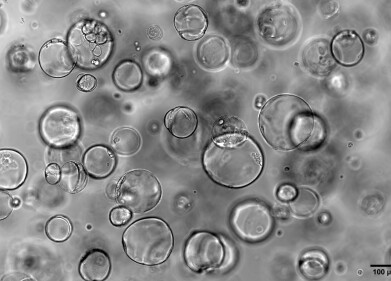
 Schematic of lipid nanoparticles with internal structures. Credit: Dr Shiyao Li
Research news
Australian scientists design novel lipid nanoparticles to transform drug and gene delivery
Nov 13 2025
Researchers in Melbourne have engineered a new class of lipid nanoparticles with complex internal structures that can be precisely tuned to carry a wide range of therapeutic molecules. The discovery could revolutionise drug delivery, cancer treatment and mRNA-based gene therapy with an adaptable and cost-effective nanomedicine platform
An Australian research team has reported a major advance in materials engineering with the creation of a novel class of lipid nanoparticles (LNPs) that display complex internal arrangements such as cubic and hexagonal phases. These non-lamellar structures expand the functional capacity of LNPs for use in diagnostics, drug delivery and gene therapy.
Using the Australian Synchrotron, located in Clayton, Melbourne – in combination with advanced cryogenic imaging – the team demonstrated that these nanoparticles possess ordered internal lattices which provide greater surface area and enhanced flexibility for loading a wide range of molecular cargo, including small-molecule drugs, proteins, metal ions and messenger RNA (mRNA). The discovery has broadened the design space for nanomedicine platforms and has the potential to transform targeted therapeutics.
Lipid nanoparticles are best known as the delivery systems that enabled the Pfizer–BioNTech and Moderna COVID-19 vaccines, which protect fragile mRNA molecules during transit to target cells. Their success prompted global interest in RNA-based medicines, now being investigated in the fields of oncology, immune disorders and genetic diseases.
The study was jointly led by University of Melbourne Laureate Professor Frank Caruso, Head of the Caruso Nanoengineering Group, and Dr Yi (David) Ju, Head of the Nanomedicine and Gene Therapeutics Laboratory at the Olivia Newton-John Cancer Research Institute and La Trobe University, alongside collaborators from RMIT University, all based in Melbourne.
“A key benefit of our new class of LNPs is that their non-lamellar structures are tuneable – their internal order and size can be precisely adjusted by varying the formulation.
“This flexibility allows us to design delivery systems for different classes of therapeutic molecules,” said first author Dr Shiyao Li, a postdoctoral researcher at the Olivia Newton-John Cancer Research Institute.
Professor Caruso explained that the team has created the LNPs from polyphenols – naturally occurring plant compounds with antioxidant and anti-inflammatory properties – combined with a lipid. He said the discovery would advance nanostructured materials design and enable applications across fields ranging from molecular delivery in oncology to protein and gene therapies, and even diagnostic nanomaterials.
Dr Ju confirmed that the team has patented a library of this new LNP class and were actively seeking industrial partners to accelerate development.
“We are very excited about the potential of this platform technology and hope to validate it within five years using therapeutic applications in animal models.
“Importantly, these LNPs can be produced using the same assembly equipment as current mRNA vaccines but with components that are significantly more affordable than those used in existing formulations,” he said.
The research has highlighted the promise of naturally derived materials to engineer nanostructures with higher capacity, lower cost, and improved adaptability – a step that could redefine how complex therapeutics are delivered at the molecular level.
For further reading please visit: 10.1002/adma.202505830



Digital Edition
Lab Asia Dec 2025
December 2025
Chromatography Articles- Cutting-edge sample preparation tools help laboratories to stay ahead of the curveMass Spectrometry & Spectroscopy Articles- Unlocking the complexity of metabolomics: Pushi...
View all digital editions








Events
Jan 21 2026 Tokyo, Japan
Jan 28 2026 Tokyo, Japan
Jan 29 2026 New Delhi, India
Feb 07 2026 Boston, MA, USA
Asia Pharma Expo/Asia Lab Expo
Feb 12 2026 Dhaka, Bangladesh