Laboratory products
Chemical Oxygen Demand (COD) is a fundamental parameter for assessing water and wastewater quality. It provides a fast, reliable measure of the organic and inorganic pollutants present in water, helping laboratories, industries, and environmental agencies monitor treatment efficiency, ensure regulatory compliance, and protect aquatic ecosystems.
COD quantifies the oxygen required to chemically oxidize pollutants in water. Elevated COD values indicate high levels of oxidizable substances, which can deplete dissolved oxygen, harm aquatic life, and signal inefficiencies in wastewater treatment. Its broad applicability makes COD essential for:
COD tests are based on chemical oxidation with strong oxidizing agents like potassium dichromate in the presence of sulfuric acid and a silver catalyst. The mixture is heated, typically to 160 °C, in sealed vials to ensure complete oxidation. Results can be measured colorimetrically (change in color intensity) or titrimetrically (quantifying remaining oxidant), expressed in mg O₂/L.
Reliable results require precise temperature control, uniform heating, and safe reagent handling, all while complying with standardized methods such as ST-COD, ISO 15705, EPA 410.4, and IRSA–CNR No. 5130.
COD tests are based on chemical oxidation with strong oxidizing agents like potassium dichromate in the presence of sulfuric acid and a silver catalyst. The mixture is heated, typically to 160 °C, in sealed vials to ensure complete oxidation. Results can be measured colorimetrically (change in color intensity) or titrimetrically (quantifying remaining oxidant), expressed in mg O₂/L.
Reliable results require precise temperature control, uniform heating, and safe reagent handling, all while complying with standardized methods such as ST-COD, ISO 15705, EPA 410.4, and IRSA–CNR No. 5130.
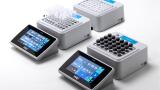
ECODryBlock Dry Block Heaters provide stable, uniform heating, reaching up to 165 °C with ±0.5 °C homogeneity. Programmable temperature ramps ensure smooth, reproducible digestion—ideal for diverse environmental water matrices.
Micro Digestion Options:
Test Tube Digestion:
Main benefits:
Contact our specialists to explore how our solutions can enhance your water and wastewater analysis.



.jpg)
-(2).jpg)