Laboratory products
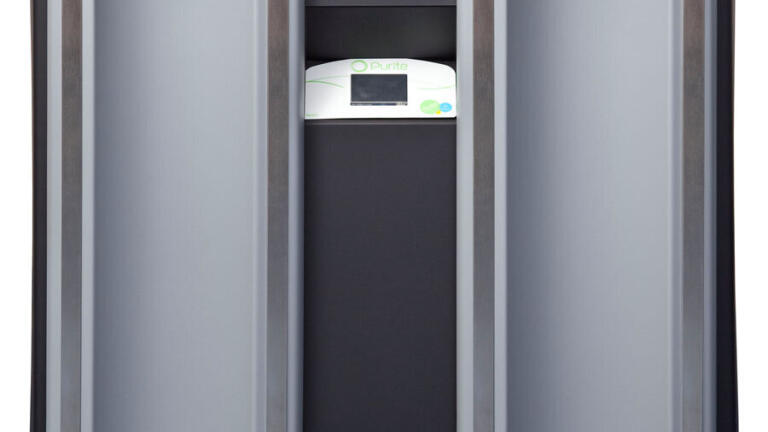
Purite , a leading UK manufacturer of water purification systems for use throughout the industrial, laboratory and healthcare sectors, has produced a white paper that highlights the key considerations that must be made when specifying water purification for the laboratory. The white paper is free to download and offers a useful tool for those planning to install or upgrade water purification facilities in laboratories of all sizes.
Purified water has long been an essential raw material used in many laboratories but, regardless of the application, volume or quality of water required, there are certain critical factors that should be considered to achieve maximised efficiency and to meet the current standard, BS EN ISO 3696:1995 ‘Water for analytical laboratory use’. This defines three grades of water purity, expressed in terms of conductivity. Grade 1 is the highest level of purity, 0.01mS/m (0.1µs/cm), with Grade 2 being 0.1mS/cm (1µs/cm), and Grade 3 at a level of, 0.5mS/m (5µs/cm).
The paper discusses how laboratories can increase efficiency and purity by replacing bottled distilled water or on-site distillation units by fitting disposable deionisation or ion exchange cartridges directly to a mains water supply to produce purified water on demand. In laboratories where a greater volume and/or higher purity of water is required then the best solution is often provided by compact, self-contained reverse osmosis (RO) systems, which feed the water supply under pressure into a module containing a semi-permeable membrane to remove up to 98% of impurities.
Purite’s paper goes on to discuss how a stand-alone RO unit can produce water of Grade 1 purity by continually circulating the permeate through a deionisation resin until the required level of purity is reached. Larger integrated systems can incorporate electro-deionisation system (EDi), for secondary purification when fed with permeate from the RO system, producing water with a quality of 10 to 15MΩ.cm, depending on flow rates and the quality of the feedwater.
As most purification systems will have to comply with BS EN ISO 3696 and provide water on demand wherever in the lab they are needed, the nature of the laboratory work may dictate that one or more self-contained units need to be positioned at different locations; alternatively, a centralised system feeding a ring-main may be required. With space being a valuable commodity in most laboratories, the chosen water purification solution needs to be as unobtrusive as possible while still delivering the required quantity and quality of water.
The paper concludes with a discussion of feed stream pre-treatment, which may be required in order to protect the RO membrane, and the need to provide routine cleaning and maintenance to ensure consistent levels of performance and reliability.



.jpg)
-(2).jpg)