Laboratory products
Polymer Nanoparticles used as Drug Carriers Characterised using NTA at Saarland University
Mar 13 2013
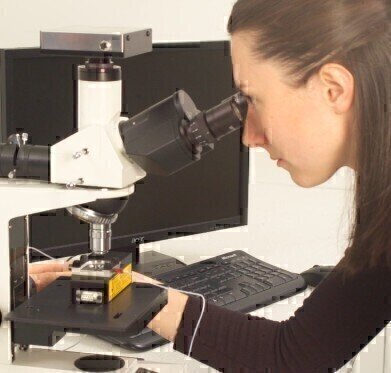
NanoSight reports on how Nanoparticle Tracking Analysis, NTA, is used to help with the characterisation of polymeric nanoparticles synthesised as drug carrier systems. This work is being carried out at Saarland University, Saarbrücken in Germany by Dr Christian Ruge and his colleagues.
In the world of pharmaceutical sciences, a detailed and full characterisation of particles synthesised as drug carrier systems is indispensable. The particle size is a crucial parameter to be monitored as this will affect the stability of formulations. It will also impact with respect to size-dependent effects in biological experiments, such as the uptake of drug systems by cells.
Nanoparticle Tracking Analysis is used as a complementary tool to a Malvern Zetasizer to characterise the nanoparticles prepared by Dr Christian Ruge, a research scientist in the Department of Biopharmaceutics and Pharmaceutical Technology in the group of Professor Claus-Michael Lehr. The particles are mainly polymer-based and typically in the size range from 100nm to 400nm. Especially when studying samples of moderate polydispersity (i.e. with a polydispersity index, PDI, of larger than 0.2), the group uses the NanoSight system to measure the preparations to identify particle populations which are not resolved by the Malvern system.
Talking of the benefits of using NTA rather than techniques such as scanning electron microscopy, SEM, or dynamic light scattering, DLS, Dr Ruge commented, "The fact that the system is performing particle-by-particle-based measurements is a huge advantage, especially in terms of its resolving power. The fact that the instrument gives a concentration value is very useful. I feel that ‘visualisation’ of the particles based on their scattered light gives more ‘insight’ as to the sample and its behaviour. I personally find that it is more fun working with the NanoSight instrument compared to the Zetasizer. The interaction with the instrument and being able to visualise the individual particles makes it less of a ‘black box’ instrument and more ‘interesting’ for me as a scientist to use. Also, I have found that during demonstrations for students, the NanoSight appears to be more transparent and thus better suited for educational purposes."
Digital Edition
Lab Asia Dec 2025
December 2025
Chromatography Articles- Cutting-edge sample preparation tools help laboratories to stay ahead of the curveMass Spectrometry & Spectroscopy Articles- Unlocking the complexity of metabolomics: Pushi...
View all digital editions









Events
Jan 21 2026 Tokyo, Japan
Jan 28 2026 Tokyo, Japan
Jan 29 2026 New Delhi, India
Feb 07 2026 Boston, MA, USA
Asia Pharma Expo/Asia Lab Expo
Feb 12 2026 Dhaka, Bangladesh




