Laboratory products
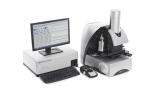
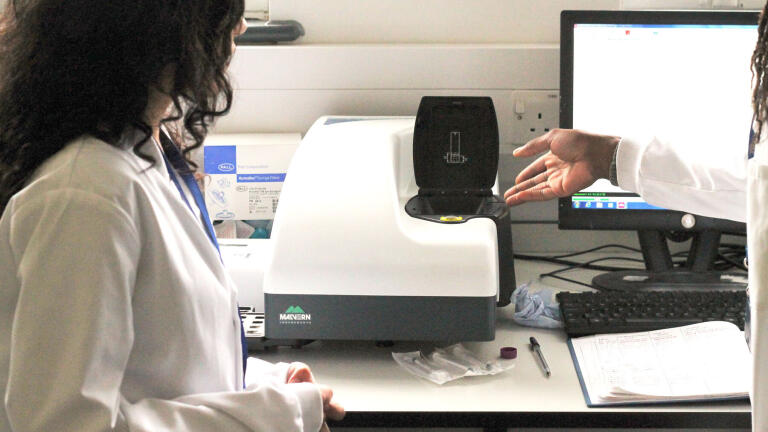
The cross-disciplinary capabilities of Malvern Instruments’ technology are being fully exploited at Queen Mary University London. The Zetasizer Nano, NanoSight Nanoparticle Tracking Analysis (NTA) and Mastersizer 2000 systems are all employed within the university’s multi-disciplinary lab. The instruments serve a wide variety of research groups working in areas as diverse as silica coating formulation through to tissue regeneration, demonstrating the value that Malvern’s robust technology brings throughout the scientific arena.
“Our lab is part of The School of Engineering and Materials Science but the instruments are used by everyone from biologists through to physicists,” said Dr Krystelle Mafina, Experimental Officer in Materials Characterisation at Queen Mary University London. “Stability and particle size define material and biomaterial performance and the Zetasizer Nano is perfectly placed to deliver this information within our multi-user environment. The instrument is robust, easy to use and data acquisition is straightforward.”
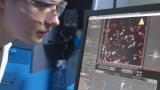
Capable of measuring particle size, zeta potential, molecular weight and protein mobility, the Zetasizer Nano from Malvern is the world’s most widely used dynamic light scattering system. Recently, research groups at Queen Mary University London have been supplementing data from the Zetasizer with data from the NanoSight Nanoparticle Tracking Analysis (NTA) system to study the behaviour of their particles and molecules over time. NTA is a unique particle visualisation technique that enables each particle within a solution to be analysed through direct observation and measurement of the diffusion event. The instantaneous, high level data delivered by NTA is being used both to validate results from Zetasizer Nano analysis and to deliver additional insight into particle behaviour.
“NTA is a relatively new addition to the lab but is already bringing value to several areas of research,” commented Dr Mafina. “For example, the ability to visualise particles over time is allowing one research group developing self-assembling proteins to trace the changes in size of their molecules over time to better understand the dynamics of aggregation. The more we learn about the technique the greater application it is finding. Malvern Instruments’ webinars, live chats and technical support are very useful in this area and continue to help our researchers push the boundaries of materials and biomaterials science.”


.jpg)
-(2).jpg)