Laboratory products
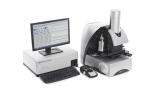
Armed with a Zetasizer Nano, a Mastersizer 2000 particle size analyser, and a Kinexus rheometer, Professor David Julian McClements and his team of researchers at the Department of Food Science, University of Massachusetts (UMass), Amherst, USA, have developed a recipe for success in the development of foods. This trio of characterisation tools from Malvern Instruments has enabled the UMass team to develop a variety of improved and novel colloidal delivery systems for food and pharmaceutical applications, including microemulsions, nanoemulsions, multilayered emulsions, solid lipid nanoparticles, and hydrogel particles.
Professor McClements said, “We use all three Malvern systems in our studies. They work well and are easy to use so students like them and use them for multiple applications. In fact, the Zetasizer is used so often, I recently bought a second instrument.
“Many of our studies employ ‘layer-by-layer’ deposition to create novel functional materials. We make a particle and coat it with sequential layers of positive and negative polymers. The Malvern Zetasizer, which has both dynamic light scattering and particle electrophoresis modules, enables us to measure particle size and charge and therefore understand the electrical interactions used to build shells around individual particles.”
He continued, “Mastersizer laser diffraction is essential for measuring the dimensions of food grade nanoparticles and microparticles. We also use the Mastersizer for determining hydrocolloid stability and droplet growth through flocculation, coalescence and Ostwald ripening.”
“In addition to the development of novel food and health-promoting compounds, several members of the department focus on investigating the impact of environmental stresses such as pH, ionic strength and temperature, and production stresses such as mixing, thermal treatment and homogenisation, on the formation of colloid systems. This type of study combines particle size characterisation with rheometry to optimise production, product quality, and functionality. For example, we recently used the Kinexus dynamic shear rheometer in our development of reduced-calorie products with desirable textural properties based on electrostatic heteroaggregation of oppositely charged particles and polymers.”



.jpg)
-(2).jpg)