Laboratory products
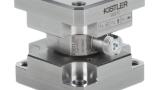
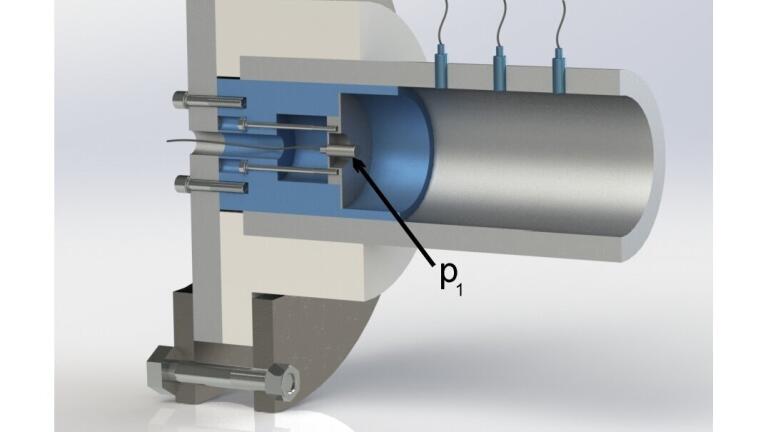
The National Physical Laboratory (NPL) is working on a dynamic pressure sensor calibration method, based on shock tube techniques, which NPL hopes will be adopted as an ISO standard. The methodology uses a shock tube, in which a bursting disc separates two sections, and an increasing pressure in one section initiates failure of the disc, creating a pressure shock wave in the other section. This shock wave is used to calibrate the sensor under test mounted in the section’s end wall. The shock tube performance has been validated using a Kistler Instruments Type 603B miniature piezoelectric pressure sensor with acceleration compensation, designed specifically for measuring pressure fluctuations of high frequency and short rise time, and the Type 5015 single channel laboratory charge amplifier with a wide measuring range.
The majority of pressure sensors used in industrial applications to make dynamic measurements are calibrated only for static measurements, even though it is widely recognised that the behaviour of sensors will deviate progressively from their static characteristics as the frequency is increased. The new facility provides a calibration process that extends the measurement traceability of pressure sensors into the dynamic regime by exposing them to extremely fast pressure steps of up to 1.4 MPa. This facility is particularly suited for characterising sensors used in applications such as gas turbine and internal combustion engine development.
The pressure steps are created in a shock tube using different combinations of gas, bursting disc thickness, and initial static pressure in the downstream section. The theoretical rise time for the pressure steps is in the region of a few nanoseconds making the frequency content of the pressure rise sufficient for practically all industrial applications. The calibration process extends the measurement traceability of the sensor into the dynamic regime by quantifying its resonant frequency and its amplitude and phase response over a wide range of frequencies. The SI traceability of the calibration is derived from the starting pressure and temperature, gas species, and shock wave velocity measurements. In addition to the standard tests, NPL is able to investigate the dynamic characteristics of entire measurement systems.



.jpg)
-(2).jpg)




.jpg)