Laboratory products
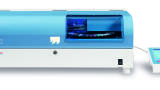
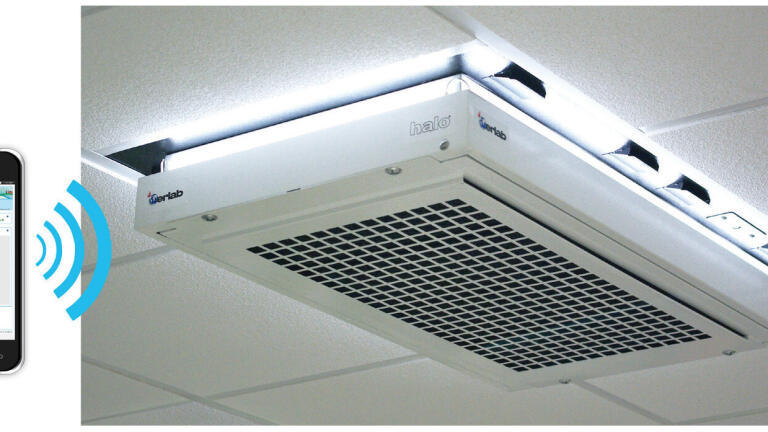
HALO permanently captures the chemical pollution of the laboratory room, filters it and returns purified air into the room. The filtration is performed through a high technology carbon-based filter derived from the ‘Neutrodine’ technology developed by Erlab when the revolutionary GREENFUMEHOOD was introduced about six years ago. The HALO filter can eliminate a very wide variety of chemicals which might affect severely the health of the chemists on the long term.
HALO shall be simply fixed to the ceiling. It doesn’t require any connection to the lab ventilation system. With a maximum flow rate of 220 m 3/h, the HALO can process large volumes of air. It is equipped with a large spectrum sensor of ambient air pollution and a management interface for the setting of the power regulation, the sensitivity of the ambient air sensor and the working periods. Pulsing LED lights communicate the sensing and capture of fugitive contaminants. Several operational modes help to adapt the functioning of the HALO to the requests of the lab, such as mode '24/7' to ventilate the room non-stop for heavy polluted lab, 'Min/Max detection' mode to activate the Halo depending on the pollution level, 'Unique Detection' mode to trigger the alarm when the ambient air sensor value exceeds a defined threshold. 'Day/Night' mode to determine different ventilation values for day and night. The management of these modes is possible through a Web Service embarked in each HALO and accessible either through a wired connection to a computer or through WIFI by flashing the QR code of the HALO. The interface of the HALO appears on the screen of the computer or smart phone or tablet and allows the user to check in real time the information and possibly modify the setting. HALO can also be connected with the building ventilation management system via a BACnet protocol.
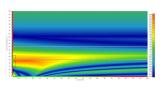
HALO makes it possible to reduce significantly the energy costs of the chemistry laboratory by reducing the energy consuming of the ACH (Air Change per Hour) traditionally used to clean the laboratory air. A study performed by the independent laboratory ECT in the USA demonstrates that the use of the HALO technology coupled with 4 x ACH was able to provide the same decay of chemical concentration as with 10 x ACH.
As an example, a chemistry lab of 120 m3 with 10 x ACH would consume an approximate US$4000 to 5000 of energy per year. The same lab equipped with two units of HALO and working with 4 x ACH would only consume around US$400 for the Halo filters and US$1600/2000 of energy per year for the 4 x ACH, which are 50% less than with 10 x ACH and for an identical air purification performance.


.jpg)
-(2).jpg)